


Switching to solar energy is no longer just an ecological choice today — it is a smart financial investment and a path to complete energy independence. However, when designing a system, most users face the main question: Which type of inverter is best for me?
The Inversol team recommends focusing on hybrid inverters. Let's discuss in detail why it is the most optimal decision in modern conditions.
What is a hybrid inverter?
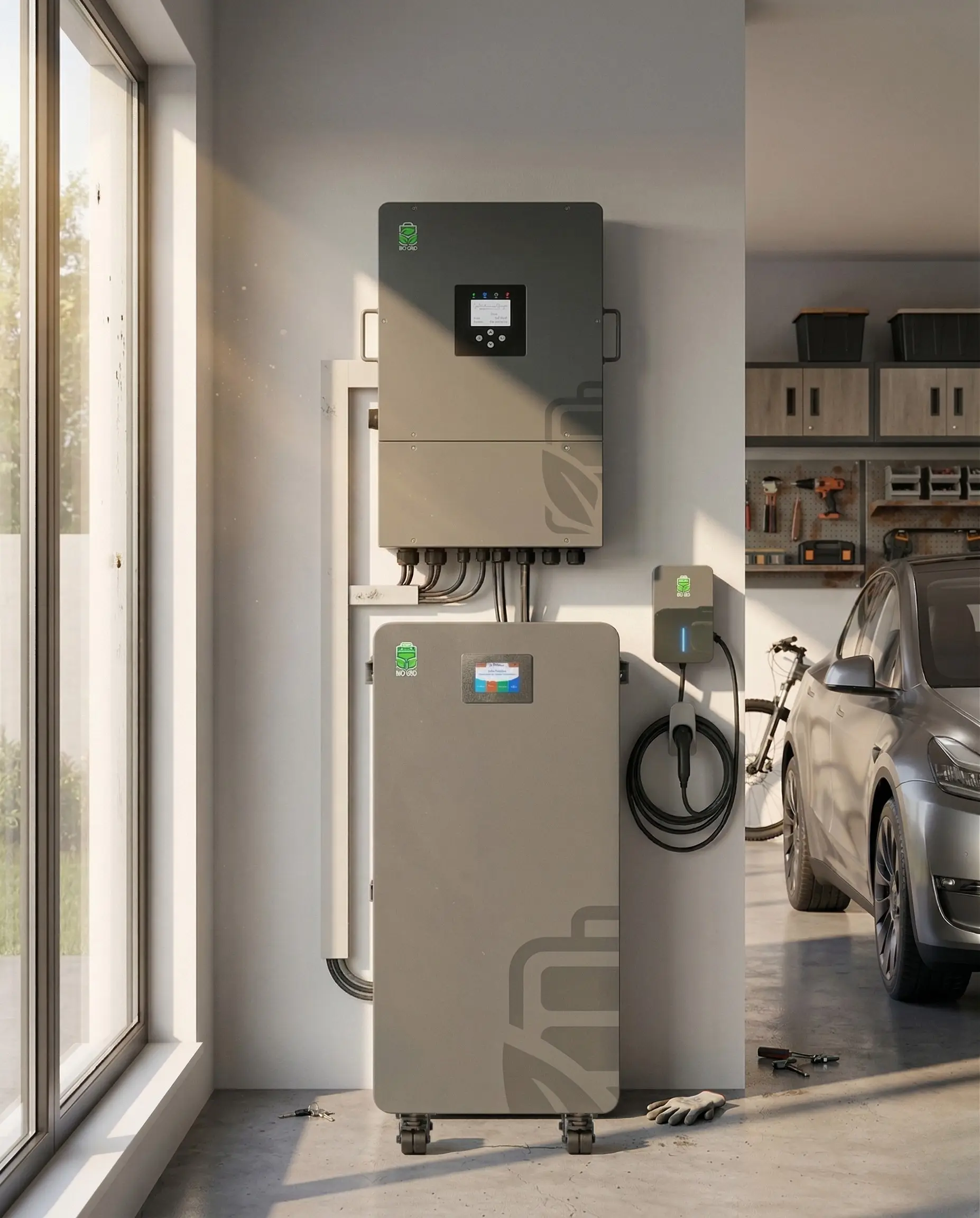
Simply put, a hybrid model combines two different technologies in one device. It can work as a traditional **On-Grid** inverter — feeding excess energy into the central grid (net-metering), and also function as an **Off-Grid** system, storing energy in LiFePO4 batteries.
The main charm of a hybrid inverter is that in the event of a grid outage, your facility does not lose power. The system automatically and instantly switches to batteries.
3 Main Advantages
If voltage drops or power outages are frequent in your region, a battery-connected hybrid will protect your expensive appliances.
Modern models (e.g., Deye, EcoBSS) can automatically direct excess energy to heat water or towards an EV charger.
You can install only the panels and the inverter first, and add batteries later depending on your budget.
How to choose the capacity?
To select the optimal capacity, you need to calculate your monthly consumption (kWh). For a medium-sized residential house and a small business with standard home appliances and heating/cooling systems, 5 to 8 kW single-phase or 10-12 kW three-phase systems are often ideal.
The inverter capacity does not mean how much it will generate, but rather — what capacity of appliances you will be able to turn on simultaneously during a grid outage.
If you still have questions and want an exact calculation, our engineers are ready to inspect your facility and offer the ideal solution.