How Do Inverters Work? Grid-Tied vs Hybrid
A solar panel produces energy, but it only becomes "smart" with the help of an inverter. What is the difference between them, and which one do you need?
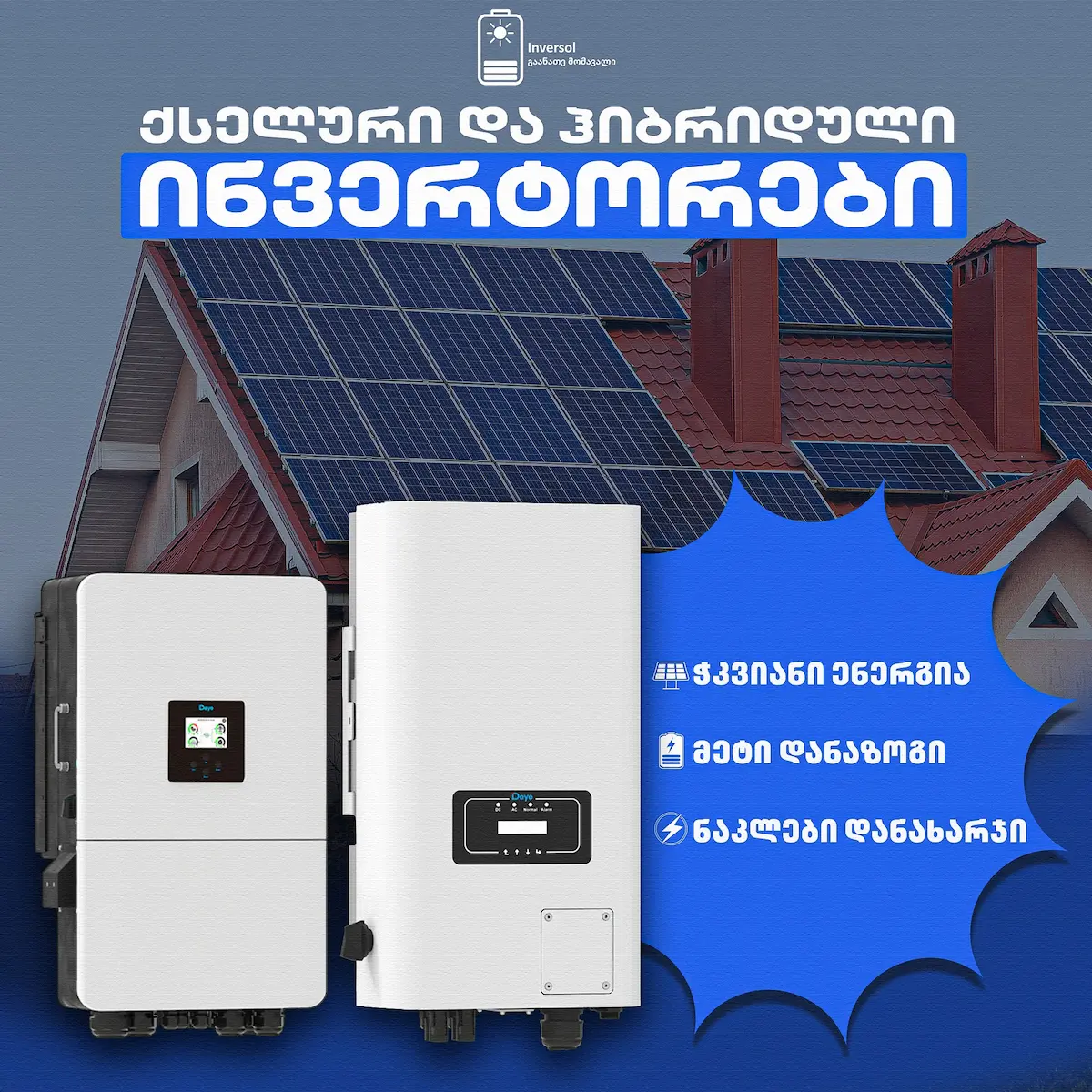
Many people think solar panels are the most important part. In reality, the heart and brain of the system is the inverter. It determines whether you will have power during an outage and how much you will save at the end of the month.
What is the Inverter's Main Function?
Solar panels generate Direct Current (DC). But our refrigerator, TV, and lights run on Alternating Current (AC).
The inverter is the "translator": it takes solar energy and converts it so that your household appliances can use it. Beyond a simple "converter," modern Deye inverters manage energy flows intelligently.
Grid-Tied (On-Grid)
The simplest system. During the day, solar energy powers the home, and any surplus is "sold" to the grid.
- ✓ Reduces electricity bill to near zero
- ✓ Most affordable solution
- ✕ Turns off during power outages
Hybrid
It does everything, plus it works with batteries. Complete energy independence.
- ✓ Backup power (no outages)
- ✓ Works with batteries and generator
- ✓ Smart energy management
Conclusion: Which One to Choose?
If your goal is solely to save money and outages are rare, choose Grid-Tied. But if you want your home to be a fortress that depends on no one, the Hybrid system is the only right choice.
Have Questions?
Our engineers will calculate the required inverter power for your home for free.