


Many businesses and families continue to pay huge amounts for electricity because they still believe decades-old myths. It's time to face the facts.
Myth #1: Climate and Sun
Expectation
"There is not enough sun in Georgia, so the panels will not work at all in winter and cloudy weather."
Reality
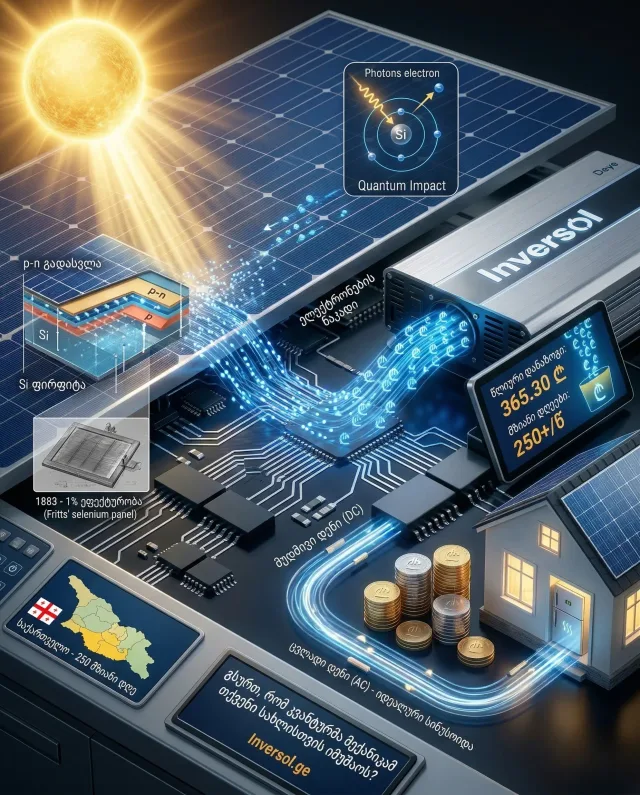
There are over 250 sunny days a year in Georgia. Modern Tier-1 panels use UV rays and generate energy even in cloudy weather. Our country's climate is ideal for solar energy!
Myth #2: Price and Investment
Expectation
"Installing a solar station is too expensive, it's a luxury and unaffordable for my business."
Reality
It's not a luxury, it's a way of survival! Given the increased tariffs, the return on investment (ROI) for a commercial station is only 3-4 years. After that, you effectively get electricity for 0 tetri for 25 years.
Myth #3: Hail and Damage
Expectation
"Hail and strong winds will come and smash all my panels."
Reality
Inversol panels are covered with special tempered glass. They undergo the strictest testing and easily withstand large hail, the heavy weight of snow, and stormy winds.
Don't let myths make you lose money. Solar energy is no longer a technology of the future — it is an economic necessity today.