






Bought an electric vehicle to save on fuel and leave gas prices behind? That’s a smart move. But the excitement often fades by the first evening: charging from a standard household outlet using the portable “brick” charger takes a full 24 hours, your house lights start flickering suspiciously, and running an extension cord out of an apartment window usually ends in a screaming match with the neighbors. Plus, public charging stations in Tbilisi or Batumi might not even fit your car due to incompatible connector types.
In this guide, the engineers at Inversol break down how to choose a stationary wallbox, navigate electrical grid phases, pick the right connector for your car brand (from Tesla to Zeekr), and legally install a station in a Georgian new-build parking garage. Explore our full range of solutions in the EV chargers catalog.
Why Using a Standard Outlet is a Wiring Lottery
You can charge your car from a standard household socket (Schuko), but it should be treated as an emergency fallback rather than a daily routine.
- Risk of overheating and fire. Standard wall outlets and concealed wiring aren’t designed to handle 10–12 hours of continuous peak load. Contacts oxidize, plastic melts, and the risk of a short circuit spikes.
- Painfully slow speeds. A home outlet safely delivers a maximum of 3–3.5 kW. With a typical 60–90 kWh vehicle battery, a 0–100% charge takes over 24 hours.
For safe, fast overnight charging, you need a specialized wallbox.
| Wallbox power | Typical use | Grid note |
|---|---|---|
| 7 kW | Overnight home charge (1-phase) | ~32 A single-phase |
| 11 kW | Faster overnight / light fleet | 3-phase preferred |
| 22 kW | Offices, parking, multi-car sites | 3-phase; see H2 22 kW |
1-Phase or 3-Phase: How to Check Your Grid and Avoid Overpaying
Choosing the right power output comes down to the capacity of your electrical grid:
1-phase grid (220 V)
Standard for most older buildings and apartments. Maximum charging power is physically capped at 7.4 kW.
3-phase grid (380 V)
The load is distributed across three lines. The station delivers 11–22 kW—significantly faster charging without straining the grid.
How to check your setup? Look at your electricity meter (Telasi or Energo-Pro)—the voltage is listed right there—or ask your building management.
What to Choose from the Inversol Lineup?
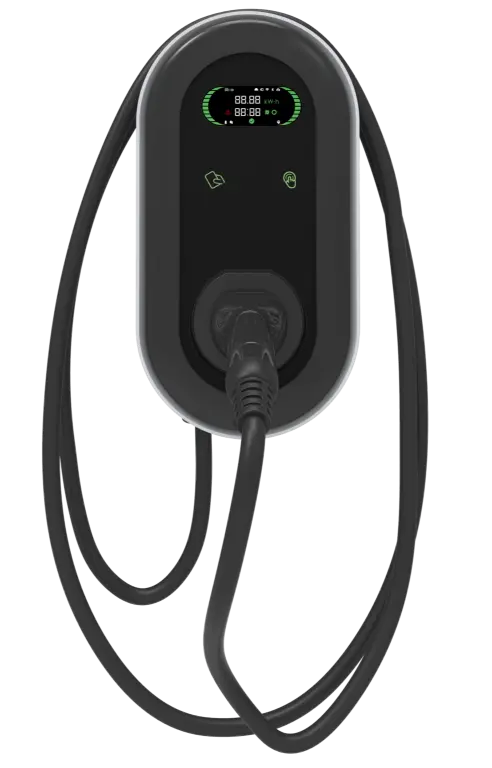
- Standard Home Solutions. Reliable workhorses like the Home Wallbox H2 11 kW or H2 22 kW designed for 3-phase grids. On a single phase, power is limited to ~7.4 kW, which is standard for most apartments.
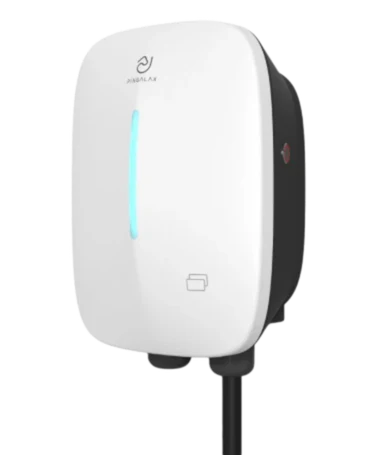
- Smart Flagship. The PINGALAX SHELL automatically adapts to 1- and 3-phase grids up to 22 kW, features app control, and boasts an IP65 rating.
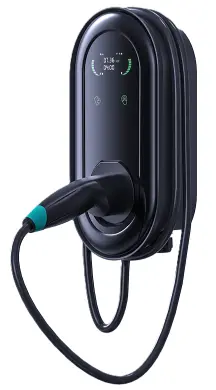
- Turbo Line. For high-power demands, look at the Turbo Wallbox H1-EU22-C 22 kW.
EV Connector Types Explained
Georgia’s EV market is driven by imports from the US, Europe, and China. All stations and connectors fall into two categories: AC (alternating current) and DC (direct current).
- Home wallboxes always run on AC. The car’s onboard charger converts it to DC for the vehicle battery. Maximum AC output tops out at 22 kW.
- Public highway fast chargers typically deliver DC (50–500 kW) directly into the vehicle battery.
AC Connectors (For Home and Parking Garages)
These are standard on home units like the PINGALAX SHELL and the EV Home series.
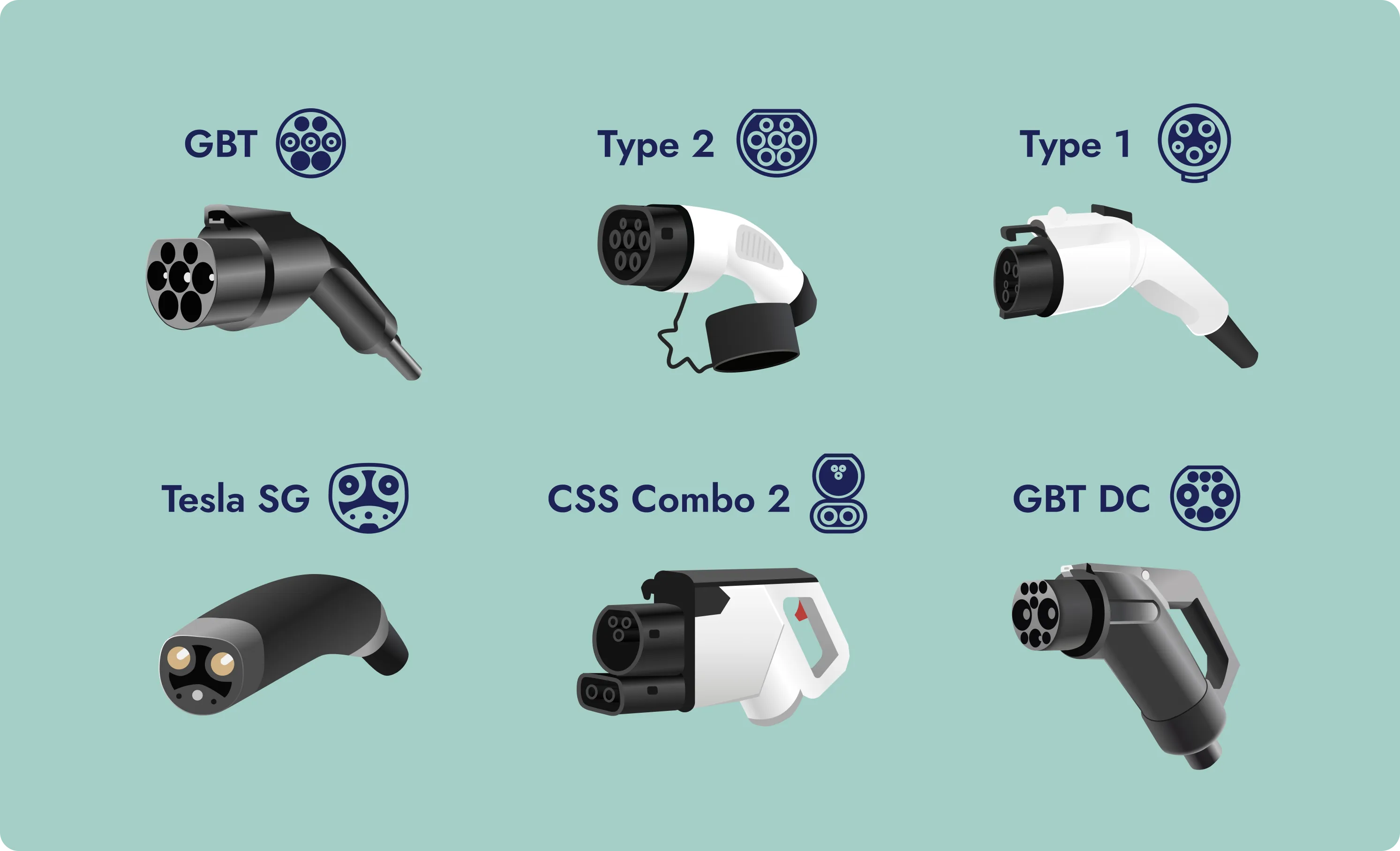
1. Type 2 (Mennekes) — European Standard
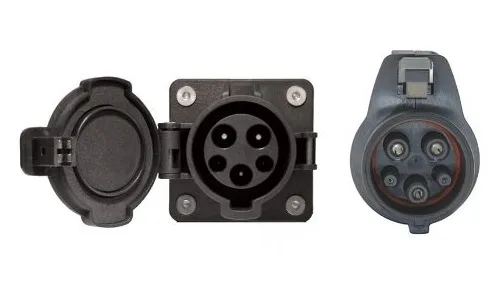
The most popular connector in Europe and Georgia. Features 7 pins supporting 1 phase up to 7.4 kW or 3 phases up to 22 kW. All Inversol home stations support Type 2 (either with an attached cable or a socket).
Cars: European Audi e-tron, BMW iX, Porsche Taycan, VW ID.4/ID.6, European-market Teslas and Zeekrs.
2. GB/T AC — Chinese Standard
Extremely common due to Chinese car imports. Visually similar to Type 2 but includes a locking latch button and is incompatible without an adapter. Supports both 1 and 3 phases.
Cars: BYD, Li Auto L7/L9, Zeekr 001/X, Avatr, Geely Monjaro PHEV, Voyah Free, Xpeng.
Solution: Pair a Type 2 station with a Type 2 → GB/T adapter.
3. Type 1 (SAE J1772) — US / Japan
Has 5 pins and supports 1 phase up to 7.4 kW.
Cars: Nissan Leaf (Gen 1 & 2), Chevrolet Bolt, older US-market BMW i3, US-market Hyundai Ioniq 5.
Solution: Use a Type 2 → Type 1 adapter.
4. Tesla NACS (US Market)
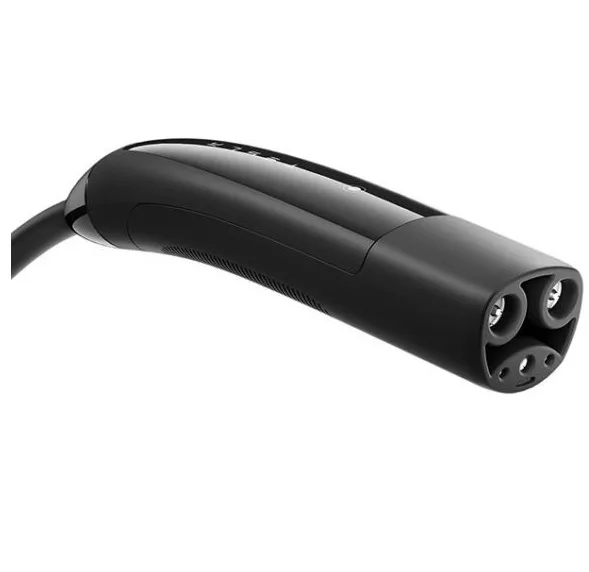
Tesla’s proprietary connector for North American models.
Cars: US-import Model 3 / Y / S / X, Cybertruck.
Solution: No need to fuss with NEMA 14-50 outlets. An Inversol station hooks up to your parking grid, and you simply use a Type 2 → Tesla adapter on the car side.
Compatibility Reference (AC — Home Charging)
| Brand and Model | Market | AC Port | Max AC Power |
|---|---|---|---|
| Zeekr (001, X, 009) | China (CN) | GB/T AC | 7 kW (1ph) / 11 kW (3ph) |
| Li Auto (L7, L8, L9) | China (CN) | GB/T AC | 7 kW (1ph) |
| BYD (Han, Tang, Song) | China (CN) | GB/T AC | 7 kW (1ph) |
| Tesla Model 3 / Y / S | USA (US) | Tesla NACS | 7–11 kW |
| Tesla Model 3 / Y / S | Europe (EU) | Type 2 | 11 kW (3ph) |
| Volkswagen ID.4 / ID.6 | China (CN) | GB/T AC | 7 kW (1ph) |
| Nissan Leaf I/II | USA / Japan | Type 1 | 3.5–6.6 kW (1ph) |
| Porsche Taycan | Europe (EU) | Type 2 | 11–22 kW (3ph) |
| Voyah Free | China (CN) | GB/T AC | 7 kW (1ph) / 11 kW (3ph) |
DC Connectors (Public Fast Chargers)
When driving along the Tbilisi → Batumi route, look up stations on PlugShare or 2Chargers. These use different cables:
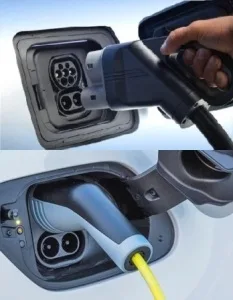
- CCS Combo 2 — European DC standard (up to 350 kW).
- GB/T DC — Chinese DC standard (up to 200–500 kW), featuring 9 pins (not to be confused with GB/T AC).
- CHAdeMO — Primarily used by the Nissan Leaf; gradually being phased out in favor of CCS.
- CCS Combo 1 — North American standard.
Important: Public DC charging requires heavier-duty (and more expensive) adapters if your car’s port doesn’t match the station’s attached cable.
How to Get Approval for Installation in a New-Build Parking Garage
Installing an EV charger in a Georgian residential parking garage is a well-established process, not a bureaucratic nightmare:
- HOA (ამხანაგობა) Consent. Formal approval to run a cabling line from the main electrical room to your assigned spot.
- Dedicated Line. A properly protected cable running from the main parking switchboard—never tapped from your apartment on the 9th floor.
- Metering (Telasi / Telmico). You cannot tap into common hallway or garage lighting. Your individual sub-meter is installed in the switchboard, and at the end of the month, you pay for your kWh directly to building management or the utility provider.
Mobile Charger vs. Stationary Wallbox
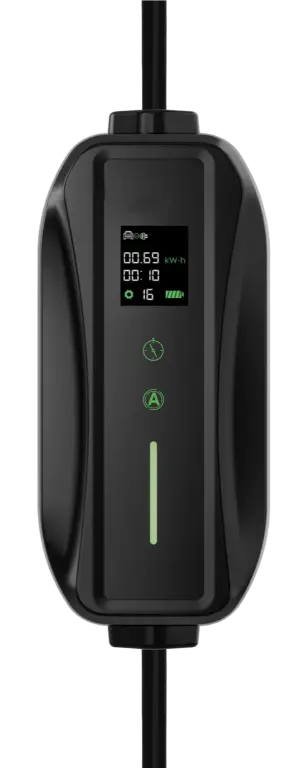
For everyday home charging, go with a stationary model like the PINGALAX SHELL.
A Portable EV Charger (7 / 11 kW) serves as a great backup for road trips across Georgia—whether you’re heading to Kazbegi, Kutaisi, or a country house. Toss the case in your trunk, and any heavy-duty outlet at a guesthouse becomes your personal charging station, saving you from waiting in highway lines.
Conclusion
A properly chosen station with the right connector saves your nerves, preserves your vehicle battery life, and ensures household fire safety. Not sure if your building’s grid can handle a Zeekr or Tesla charging at 11 kW? Need help finding adapters?
Message us on WhatsApp—Inversol engineers will provide a free consultation, check your parking grid specifications, and select the perfect station for your EV.