Floating Neutral and 380 V at the Outlet: The Fatal Hybrid Install Error in Georgia
Why breaking N on Deye/EcoBSS burns loads at ~340–390 V, voids warranty, and who pays. Inversol N/PE rules and 3P+N Early-make / Late-break bypass.
Install Inversol app
Quick access from your home screen
Open in Safari to install
To add Inversol to your home screen, open this page in Safari — tap ⋯ or the browser icon and choose "Open in Safari".
Three safe ways to find out your network type, and which Deye or ECOBSS models fit each case.
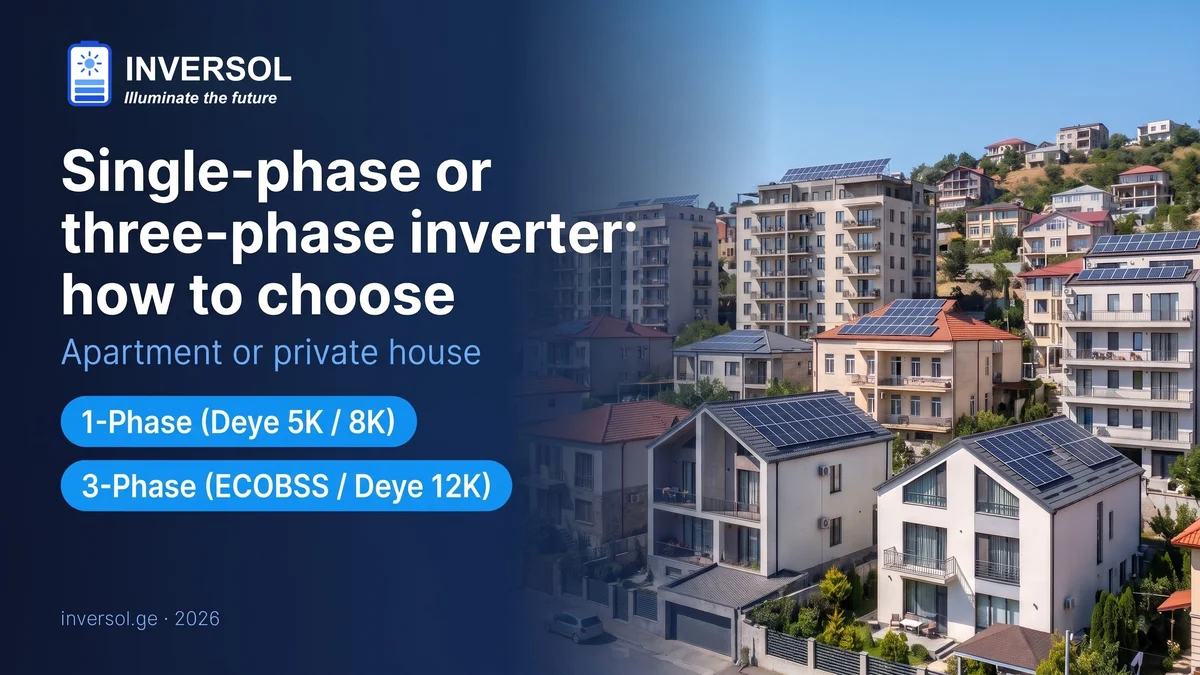
A wrongly chosen inverter either cannot connect to your grid at all or leaves part of your appliances without backup. That is why the first step of any hybrid system project is to establish how many phases your supply has — before power, brand or battery.
In Georgia most apartments and private houses have a single-phase supply, which is enough for ordinary household use. Workshops, hotels, restaurants and large houses with powerful equipment more often need a three-phase one.
A single-phase hybrid inverter is the right choice if:
Our single-phase models are the Deye SUN-5K, 6K and 8K SG05LP1 (5, 6 and 8 kW). They work with low-voltage LiFePO4 batteries (40–60 V, typically 51.2 V) such as ECOBSS STORE L5, L10 and L15, keep the house powered when the grid is down, and up to 16 units can be paralleled, so the system can grow later.
If your premises have a 380/400 V supply, a three-phase hybrid system gives you:
A common case: three phases enter the building, but almost every appliance is a 220 V single-phase one. Then there are two sensible options:
The choice depends on what must keep working during an outage: a few critical circuits or the whole building.
| Parameter | Single-phase | Three-phase |
|---|---|---|
| Best for | Apartments, medium-sized houses | Large houses, hotels, workshops, small production |
| Supply voltage | 220–230 V | 3×230/400 V |
| Power of our models | 5–8 kW | 6–20 kW |
| Backup during an outage | Only the phase the inverter is connected to | All three phases |
| Three-phase equipment (VRF, chillers, pumps, machines) | Not suitable | Suitable |
| Parallel connection | Up to 16 units (SG05LP1) | Up to 10 units (SG05LP3) |
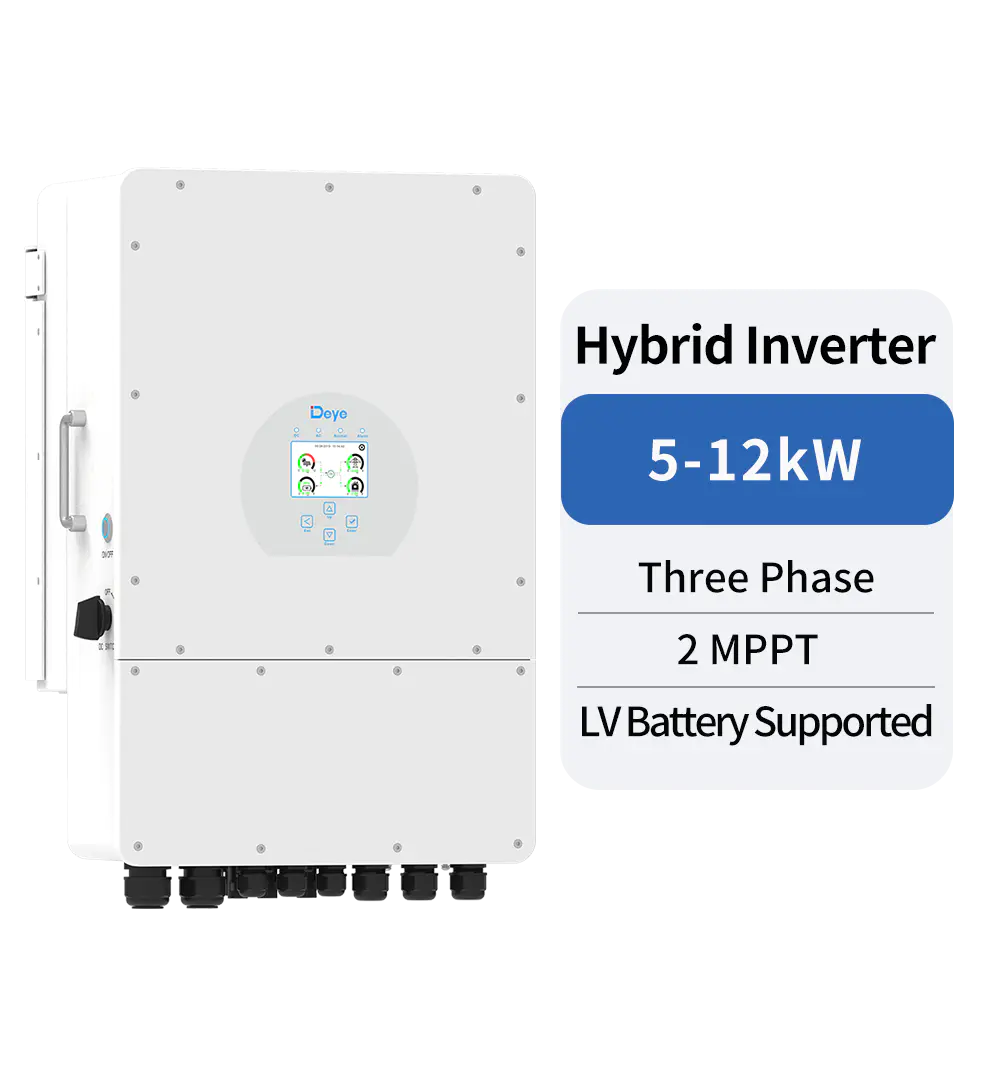
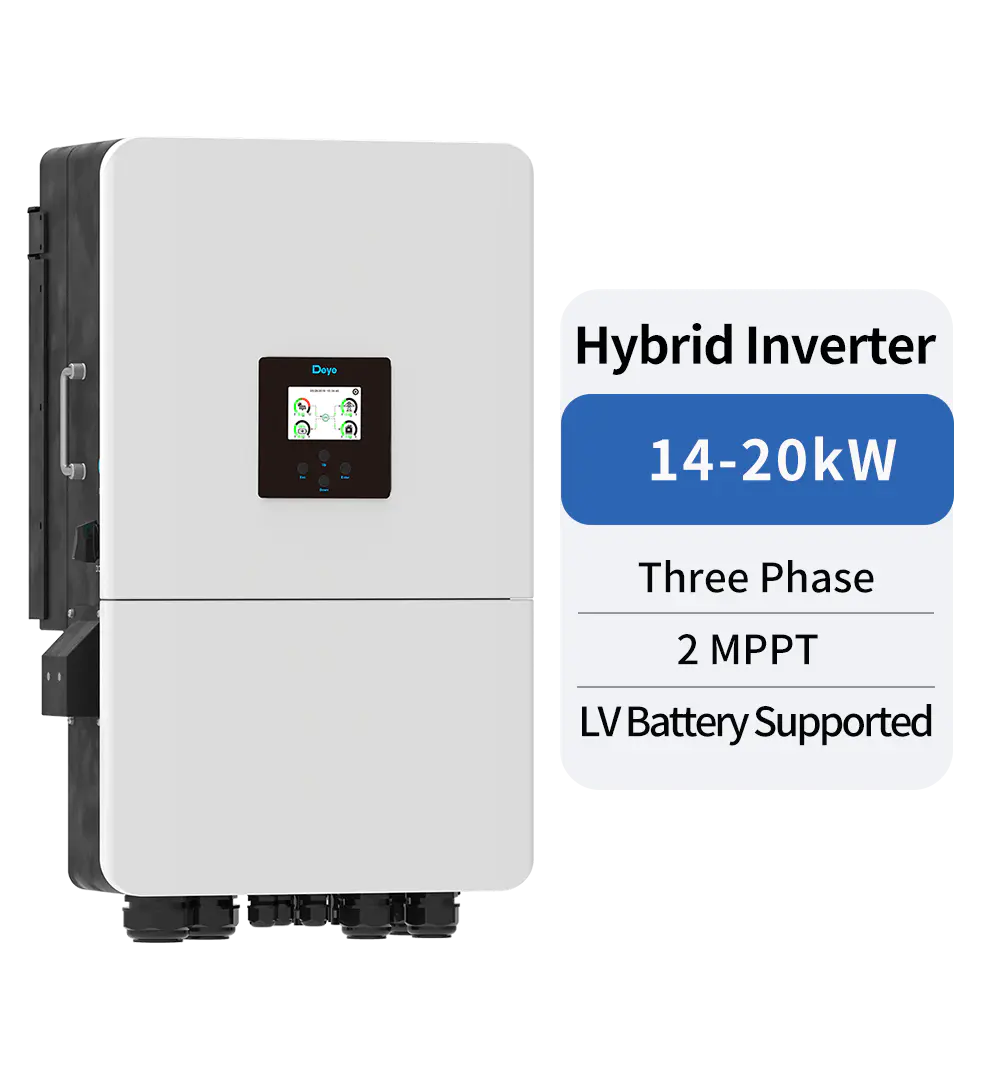
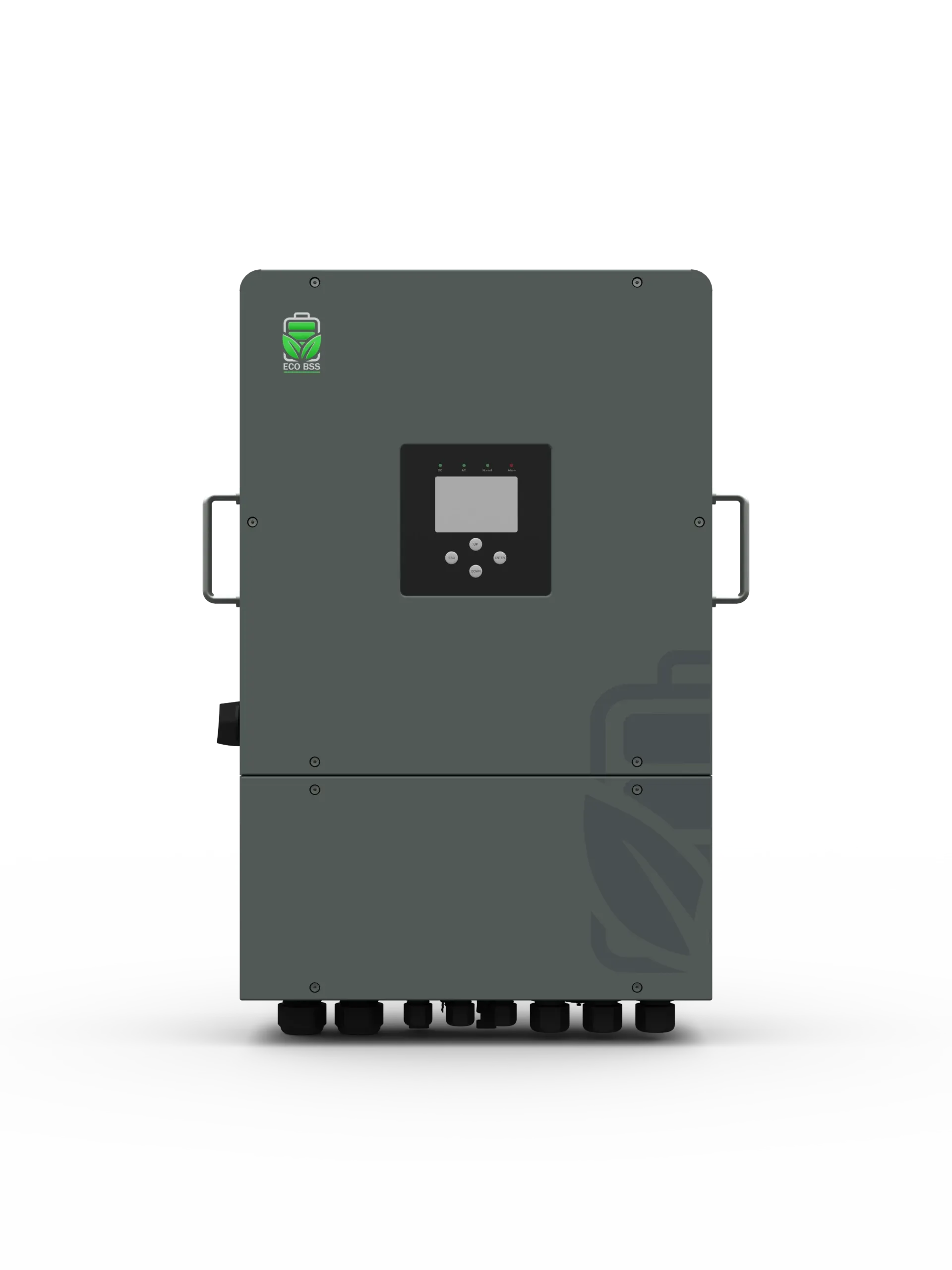
| Our models | Deye SUN-5K / 6K / 8K SG05LP1 | Deye SUN-6K–20K SG05LP3, ECOBSS FLEX 3L (6–12 kW) |
| Main risk to design for | Overload of the phase it is connected to | Broken neutral (floating neutral), phase imbalance |
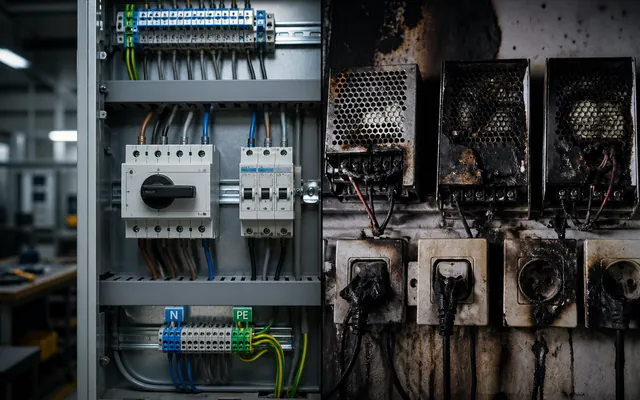
On a three-phase system the neutral conductor matters more than most people expect. If the neutral breaks between the grid and the load, or a service bypass is built on a plain 4-pole breaker, the neutral point shifts and the lightly loaded phase can rise to roughly 340–390 V, which destroys electronics.
Details and rules: our article on floating neutral and 380 V at the outlet.
Full range: inverter catalog.
See also: solar panel calculator by electricity bill, what runs on a 5 kW, 12 kW and 20 kW inverter.
Send a photo of your main electrical panel and meter on WhatsApp: +995 568 999 668. The Inversol team will help you choose a system for your site. You can also open the online constructor.
Why breaking N on Deye/EcoBSS burns loads at ~340–390 V, voids warranty, and who pays. Inversol N/PE rules and 3P+N Early-make / Late-break bypass.
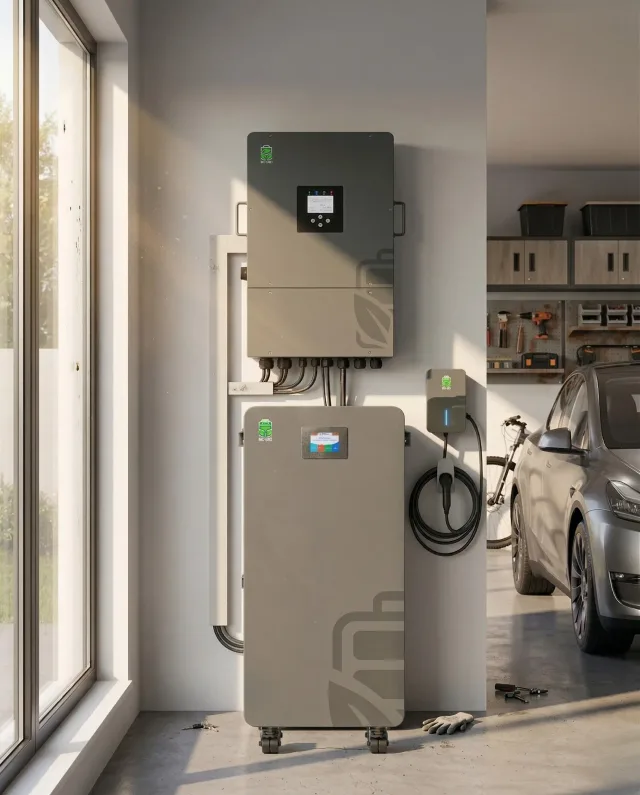
How to size a hybrid inverter for home or business in Georgia: kW, 10 ms UPS, LiFePO4. Compare Deye — request a consult!
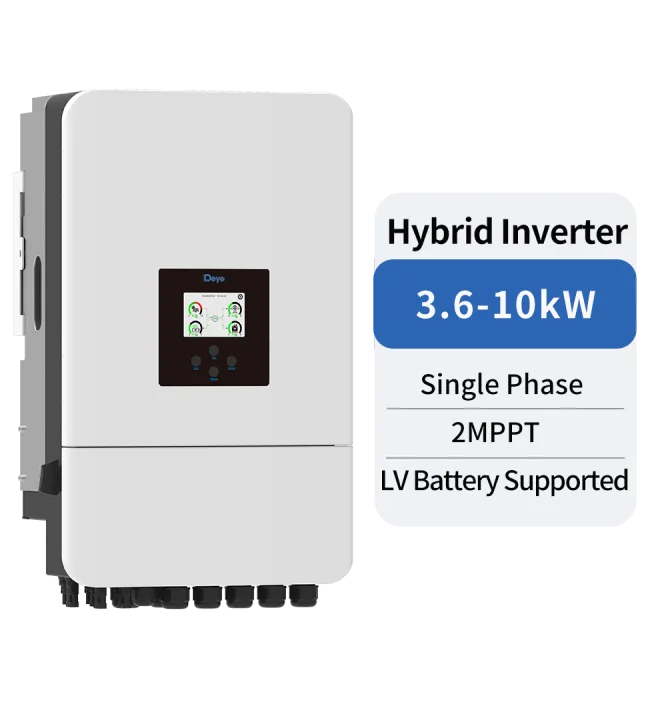
Quiet apartment UPS in Tbilisi/Batumi without solar panels — hybrid inverter + LiFePO4. Request a free consultation!
In-stock models from the Inversol warehouse — supply and install with Inversol and partners.