


From
7,625₾
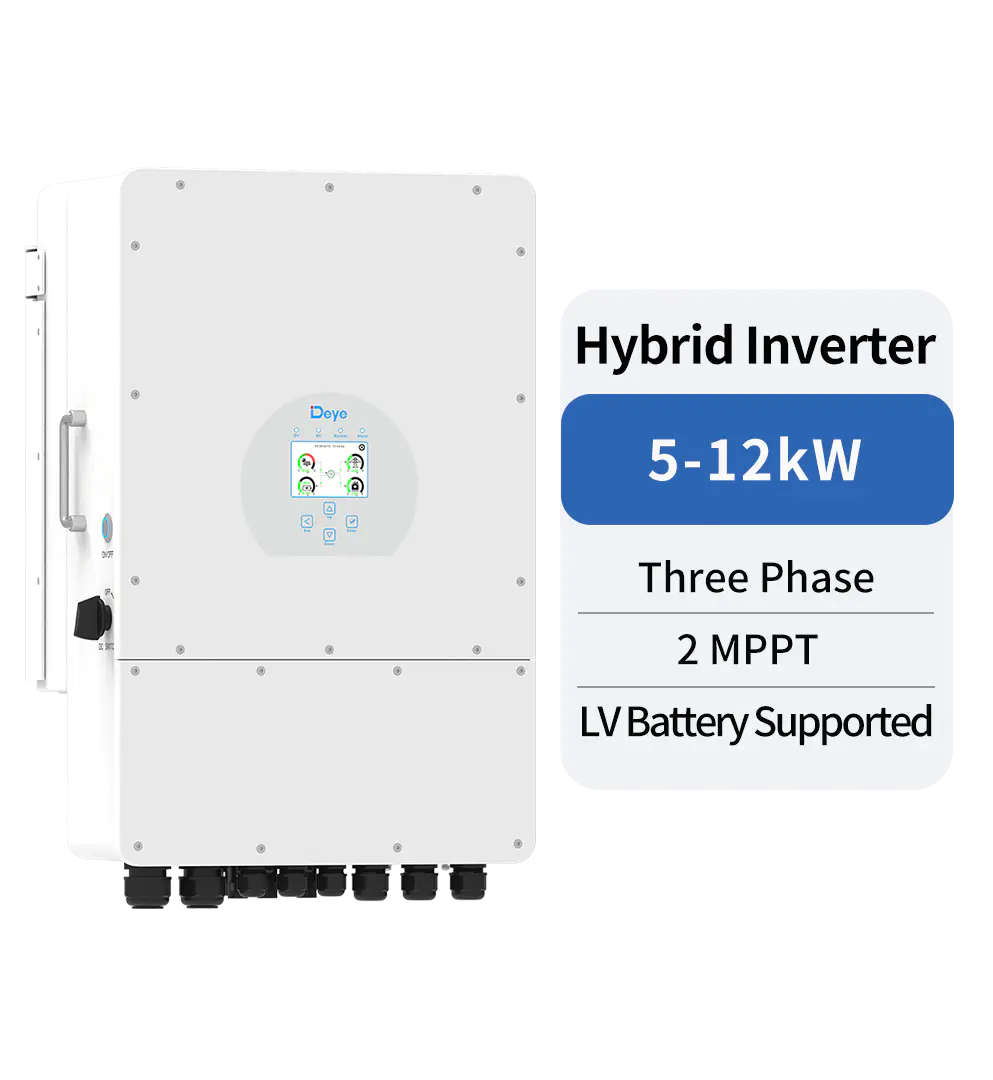
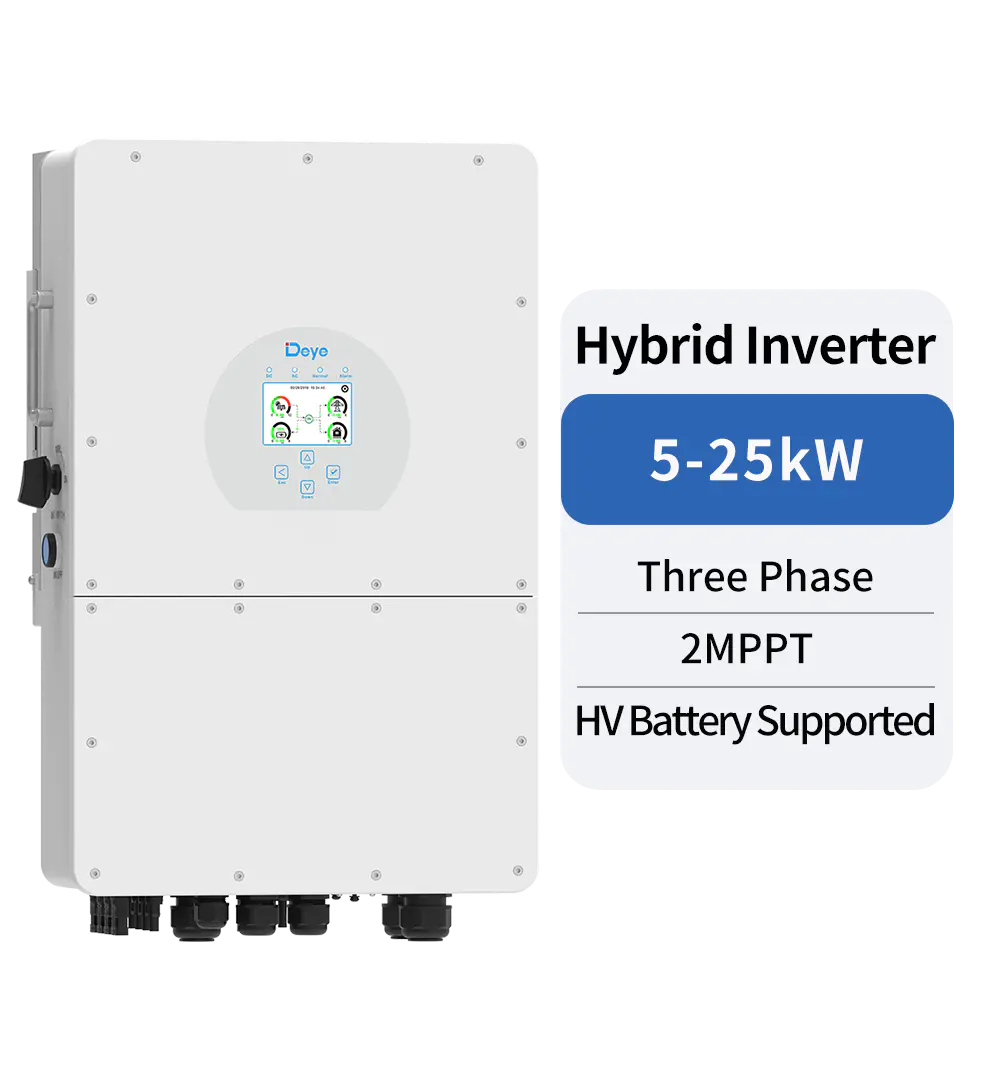
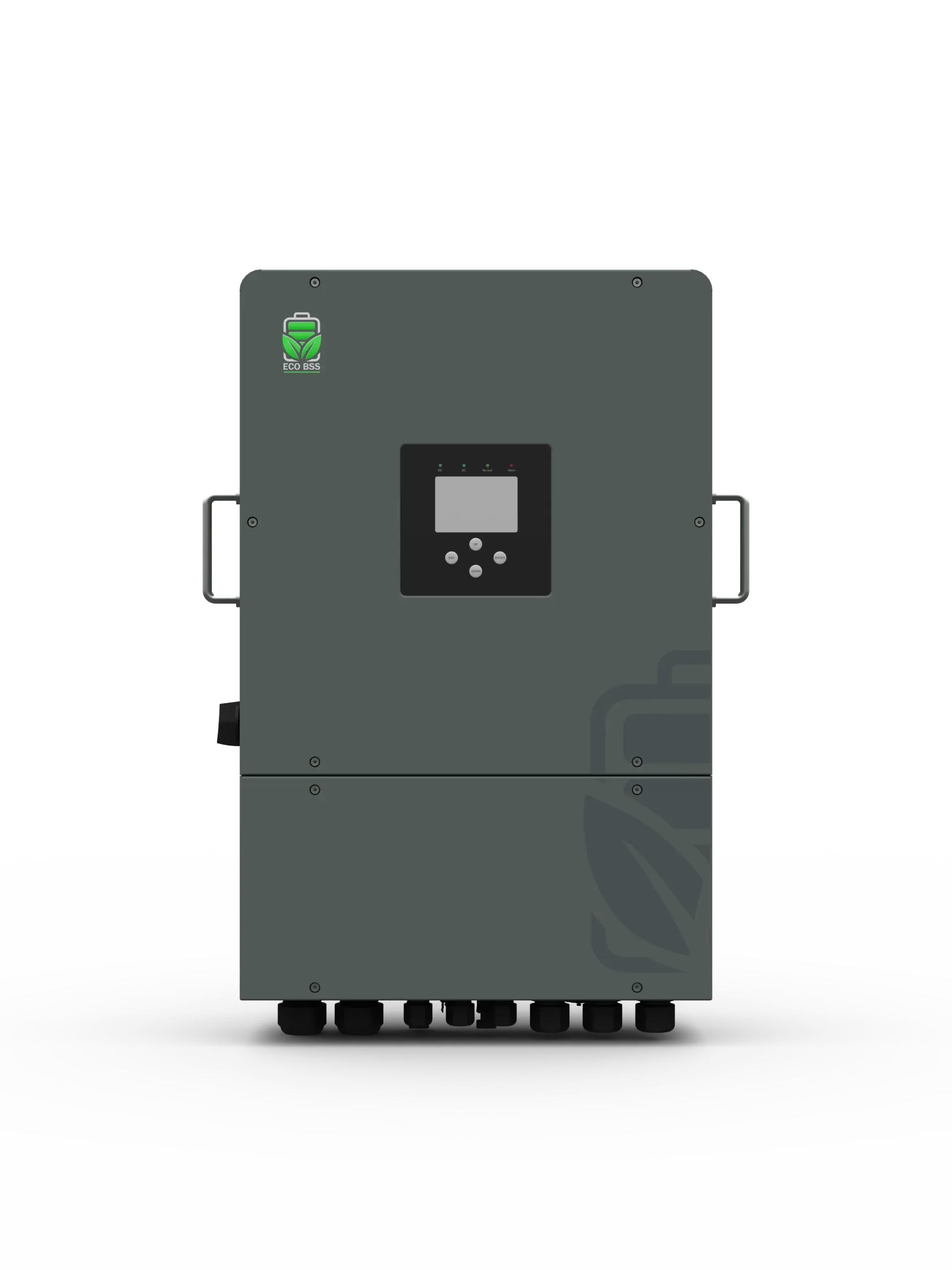
Deye SUN-5…12K-SG04LP3-EU Hybrid Inverter
The Deye SUN-12K-SG04LP3 is a low-voltage (51.2 V) three-phase hybrid inverter engineered for complex energy routing, featuring an internal N-PE bonding relay, <10 ms UPS transfer, and native support for extreme phase asymmetry.
Tech Specs
| Parameter | SUN-5K-SG04LP3-EU-AM2-P | SUN-6K-SG04LP3-EU-AM2-P | SUN-8K-SG04LP3-EU-AM2-P | SUN-10K-SG04LP3-EU-AM2-P | SUN-12K-SG04LP3-EU-AM2-P |
|---|---|---|---|---|---|
| Battery Input Data | |||||
| Battery Type | Lead-acid or Lithium-ion | ||||
| Battery Voltage Range(V) | 40-60 | ||||
| Max.Charging/Discharging Current(A) | 120 | 130 | 190 | 210 | 240 |
| Charging Strategy for Li-ion Battery | Self-adaption to BMS | ||||
| Number of Battery Input | 1 | ||||
| PV String Input Data | |||||
| Max. PV Access Power (W) | 10000 | 12000 | 16000 | 20000 | 24000 |
| Max. PV Input Power(W) | 8000 | 9000 | 12800 | 16000 | 19200 |
| Max. PV Input Voltage(V) | 800 | ||||
| Start-up Voltage(V) | 160 | ||||
| MPPT Voltage Range(V) | 200-650 | ||||
| Rated PV Input Voltage(V) | 550 | ||||
| Max. Operating PV Input Current (A) | 20+20 | 20+20 | 20+20 | 36+20 | 36+20 |
| Max. Input Short-Circuit Current (A) | 30+30 | 30+30 | 30+30 | 54+30 | 54+30 |
| No.of MPP Trackers/No.of Strings MPP Tracker | 2/2+1 | 2/2+1 | 2/2+1 | 2/2+2 | 2/2+2 |
| AC Input/Output Data | |||||
| Rated AC Input/Output Active Power(W) | 5000 | 6000 | 8000 | 10000 | 12000 |
| Max. AC Input/Output Apparent Power (VA) | 5500 | 6600 | 8800 | 11000 | 13200 |
| Rated AC Input/Output Current(A) | 7.6/7.2 | 9.1/8.7 | 12.1/11.6 | 15.2/14.5 | 18.2/17.4 |
| Max. AC Input/Output Current(A) | 8.4/8 | 10/9.6 | 13.4/12.8 | 16.7/15.9 | 20/19.1 |
| Max. Continuous AC Passthrough (grid to load)(A) | 45 | ||||
| Peak Power (off-grid)(W) | 2 times of rated power, 10s | ||||
| Power Factor Adjustment Range | 0.8 leading to 0.8 lagging | ||||
| Rated Input/Output Voltage | 220/380V,230/400V 0.85Un-1.1Un 3L+N+PE | ||||
| Rated Input/Output Grid Frequency/Range(Hz) | 50/45-55, 60/55-65 | ||||
| Total Current Harmonic Distortion THDi | <3% (of nominal power) | ||||
| DC Injection Current | <0.5%ln | ||||
| Efficiency | |||||
| Max. Efficiency | 97.6% | ||||
| Euro Efficiency | 97.0% | ||||
| MPPT Efficiency | >99% | ||||
| Equipment Protection | |||||
| Integrated | DC Reverse Polarity Protection, AC Output Overcurrent Protection, Thermal Protection, AC Output Overvoltage Protection, AC Output Short Circuit Protection, DC Component Monitoring, Arc Fault Circuit Interrupter (optional), Anti-islanding Protection, DC Switch, Insulation Impedance Detection, Residual Current Detection | ||||
| Surge Protection Level | TYPE II(DC), TYPE II(AC) | ||||
| Interface | |||||
| LCD/LED Display | LCD | ||||
| Communication Interface | WIFI, RS485, CAN | ||||
| General Data | |||||
| Operating Temperature Range(℃) | -40 to +60℃, >45℃ Derating | ||||
| Permissible Ambient Humidity | 0-100% | ||||
| Permissible Altitude | 3000m | ||||
| Noise(dB) | ≤ 55 | ||||
| Ingress Protection(IP) Rating | IP 65 | ||||
| Inverter Topology | Non-Isolated (solar), Isolated (battery) | ||||
| Over Voltage Category | OVC II(DC),OVC III(AC) | ||||
| Cabinet size(W*H*D)[mm] | 422×658×254(Excluding connectors and brackets) | ||||
| Weight[kg] | 39.8 | ||||
| Warranty | 5 Years/10 Yearsthe Warranty Period Depends the Final Installation Site of Inverter, More Info Please Refer to Warranty Policy | ||||
| Type Of Cooling | Intelligent Air Cooling | ||||
| Grid Regulation | IEC 61727, IEC 62116, CEI 0-21, EN 50549, NRS 097, RD 140, UNE 217002, OVE-Richtlinie R25, G99, VDE-AR-N 4105 | ||||
| Safety EMC/Standard | IEC/EN 61000-6-1/2/3/4, IEC/EN 62109-1, IEC/EN 62109-2 | ||||
The inverter supports heavily unbalanced phase loads, allowing up to 50% of its nominal power (6 kW) to be drawn on a single phase. For capacity expansion, up to 10 units can be connected in parallel using the Parallel A and Parallel B CAN interfaces in a daisy-chain topology. In this configuration, battery CAN communication (BMS port) is connected exclusively to the Master unit, while Modbus addresses are assigned sequentially to the Slaves.
The multifunctional GEN Port fundamentally alters system topology. When used for AC Coupling (Retrofit) alongside the Heckman Genswitch, the hybrid inverter actively controls the attached On-Grid string inverter. In Off-Grid mode, the Deye unit dictates the string inverter's shutdown to prevent battery overcharge, whereas in On-Grid mode, it allows the string inverter to operate without interference. For fire safety (P.POŻ compliance), killing power to the Load port requires physically cutting both the grid supply and the battery DC feed.
By default, the system uses the CHINT DTSU 666 meter. However, if the grid measurement point is more than 30 meters from the inverter, installation requires an external Smart Meter (e.g., Eastron SDM Modbus V2) utilizing RS485, Wi-Fi converters, or PLC (Power Line Communication) over existing phase wires. Grounding architecture depends on local regulations: the inverter features an internal relay that bonds the neutral and PE on the backup side during island mode, remaining open during grid-tied operation.
Ideal for
- ✓ Installers designing parallel systems (up to 10 units) with centralized Master-BMS communication
- ✓ Facilities requiring Retrofit (AC Coupling) using the GEN port or Heckman Genswitch
- ✓ Sites with grid measurement points exceeding 30 meters, requiring PLC/RS485 Smart Meters
Compatible batteries
Often added together
Technical FAQ
What are the DC wiring specifications for the 12 kW model?
How does the Deye scheduling differ from EcoBSS EMS firmware?
How is the CT clamp and Smart Meter wiring configured?
How does the N-PE configuration work in Off-Grid mode?
Official product documentation and datasheets.
Datasheet (PDF) PDF