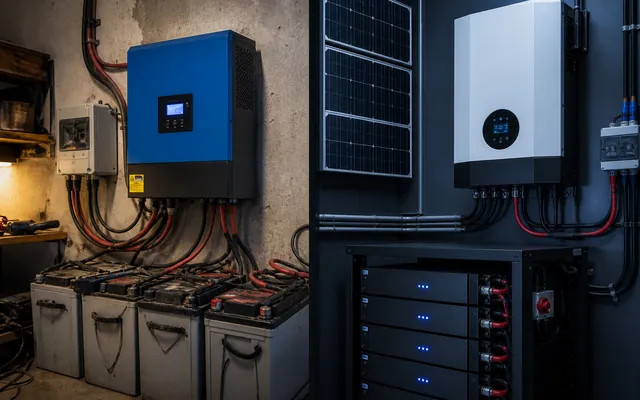



Sudden power outages in Georgia are a classic scenario familiar to everyone. You are working on an important project at your computer, watching a movie, or simply sleeping when suddenly the whole house plunges into darkness. A regular computer Uninterruptible Power Supply (UPS) starts beeping annoyingly and dies within 5 minutes, the internet disappears, and the refrigerator starts defrosting.
The solution seems obvious — buy a generator. But what if you live in an apartment in Tbilisi or Batumi? Installing a petrol generator on a balcony is forbidden: exhaust fumes will drift into your windows, and the roaring noise will drive your neighbors crazy.
In this article, Inversol engineers debunk the main myth about energy independence. We will tell you why hybrid inverters aren't just for solar panel owners and how you can build a completely silent, safe, and powerful backup power system right inside your apartment using one.
Why a Standard Computer UPS or Cheap Inverter is a Waste of Money
Many people try to solve blackout issues by purchasing inexpensive computer UPS units or cheap car inverters. In practice, this results in burnt appliances and wasted money. Here is why:
- Energy bank Lifespan. Cheap UPS units use outdated lead-acid (AGM/GEL) energy banks. With frequent blackouts, they degrade in just 1–2 years and lose their ability to hold a charge.
- "Dirty" Power (Modified Sine Wave). This is the main enemy of your household appliances. Cheap converters output a "stepped" wave. Computer power supplies hum and overheat from this, while gas heating boilers, circulation pumps, and refrigerator compressors simply burn out.
Modern household appliances require a pure sine wave — the ideal current supplied by professional hybrid inverters.
How a Hybrid Inverter Works Without Solar Panels
The word "hybrid" often frightens buyers because it creates the misconception that you must buy solar panels and mount them on a roof. This is a myth!
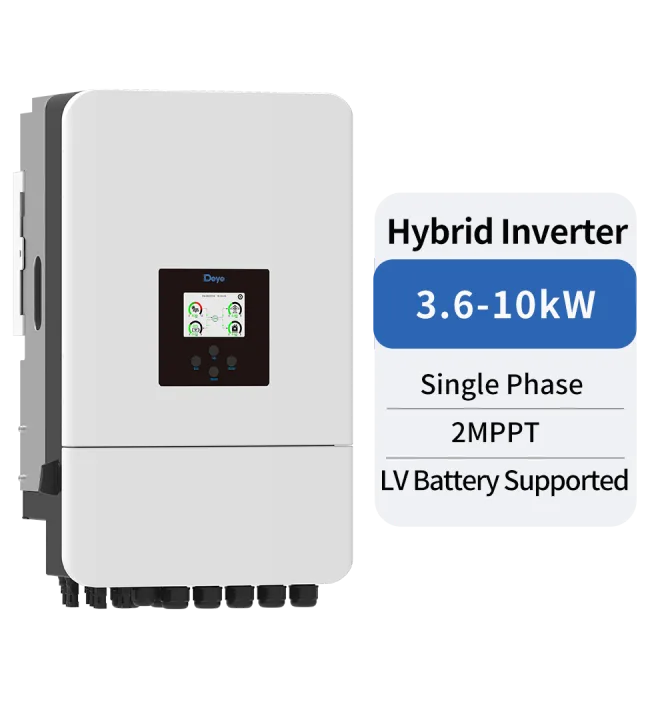
A hybrid inverter works perfectly as a smart, high-capacity uninterruptible power supply connected directly to a standard city power outlet.
- When grid power is on. The inverter draws electricity from the city grid (Telasi / Energo-Pro), powers your home directly, and simultaneously charges its energy bank.
- When the power goes out. The device instantly (in under 10 milliseconds!) switches the apartment's power to the energy bank. Your computer won't even have time to reboot, the router won't interrupt downloads, and the lights won't even flicker. More on the physics of switching — in Anatomy of a Millisecond.
- Financial bonus. You can configure the inverter to charge the energy bank at night (when electricity tariffs are lowest) and power the home with cheap stored energy during the day, lowering your utility bills. Tariff context — in our article on the 2026 tariff explosion.
If you move to a private house in the future, you can simply take the inverter with you and connect solar panels to it. The system scales with you.
UPS vs Hybrid + LiFePO4
| Factor | Computer UPS / generator | Hybrid + LiFePO4 |
|---|---|---|
| Noise | Beeps / diesel roar | Near-silent |
| Fuel / fumes | Often required | None indoors |
| Switch time | Seconds–minutes (genset) | <10 ms |
| Runtime | Minutes (UPS) / limited tank | Hours–days (kWh sized) |
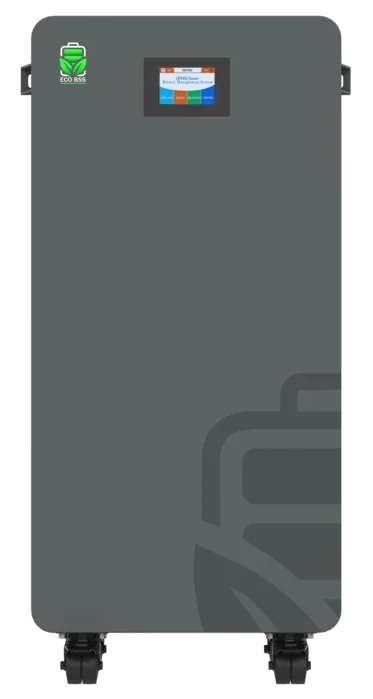
Compact apartment kits start from Deye SUN-3.6K or Deye SUN-5K-SG05LP1 with modules from the LiFePO4 energy bank range.
Anatomy of the Ideal Home UPS: Inverter + LiFePO4
To make the system safe for installation inside a living room, hallway, or enclosed balcony, selecting the right energy bank chemistry is crucial.
Forget lead-acid and e-scooter lithium-ion (NMC) energy banks. The modern standard for home backup is Lithium Iron Phosphate (LiFePO4).
- They are completely safe, emit no toxic gases, and are non-flammable even when physically damaged.
- Resource lifespan — up to 6,000 charge/discharge cycles. In real-world conditions, this translates to 15–20 years of operation without significant capacity loss.
Ready-Made Apartment Solution from Inversol
What Can You Power with a 15 kWh Energy bank? (Practical Calculation)
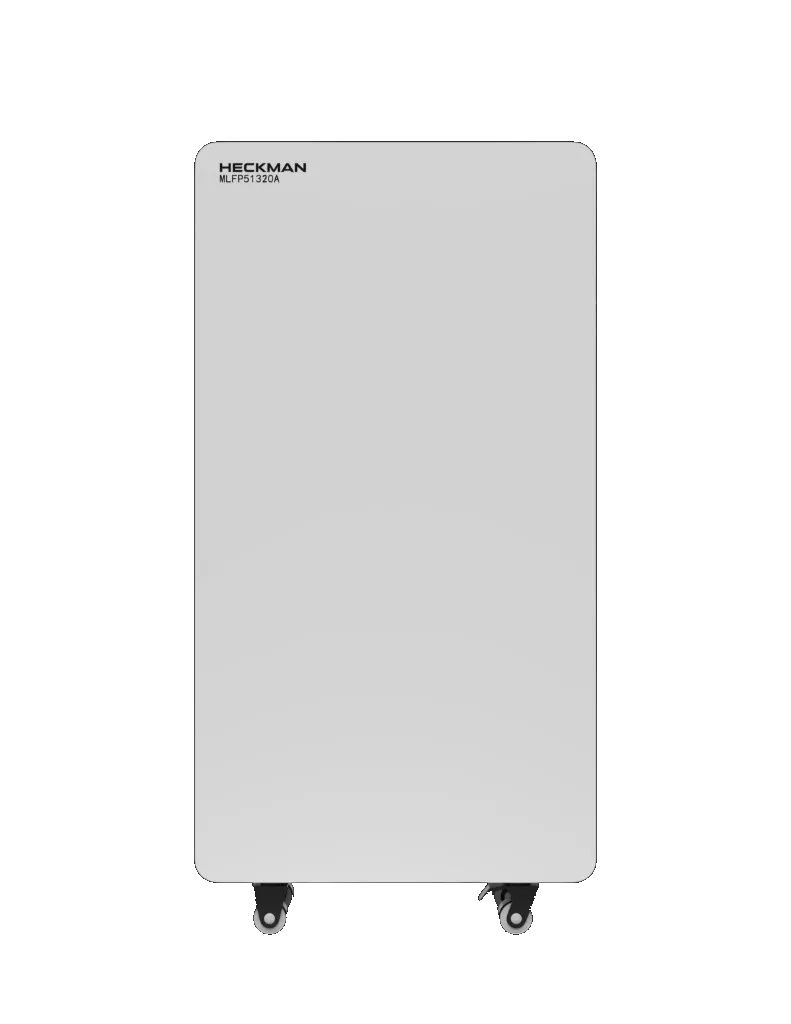
How long will the HECKMAN MLFP51320A module (15.36 kWh) last during a blackout? Let's calculate the consumption of essential household appliances:
| Device | Consumption per hour (Watts) | Operating pattern |
|---|---|---|
| Wi‑Fi router + smartphone chargers | 20 W | Runs continuously |
| Lighting (5–7 LED bulbs) | 50 W | Used during evenings |
| Gas heating boiler (pump + controls) | 100–150 W | Operates cyclically (in winter) |
| Refrigerator (A++) | 150–200 W | Compressor turns on every 2–3 hours |
| TV / Laptop | 100 W | Used as needed |
| TOTAL constant load | ~400–500 W |
Result: a ~15 kWh energy bank is sufficient to power this full set of equipment continuously for approximately 30 hours (15,000 Wh ÷ 500 W). Since appliances like the refrigerator and heating boiler run cyclically rather than constantly, real-world autonomy extends to 45–60 hours — up to two and a half days. You won't even notice the power outage.
Conclusion
Waiting for line repairs to finish or emergency blackouts to stop is pointless. You can take control of your home's comfort and security today. A hybrid inverter with a LiFePO4 energy bank provides silence, peaceful sleep, warm radiators in winter, and uninterrupted internet under any circumstances.
Want to eliminate sudden power outages in your apartment once and for all?
Send a message to Inversol engineers on WhatsApp — we will calculate the required energy bank capacity for free, check your electrical wiring, and select the ideal silent UPS setup for your needs.