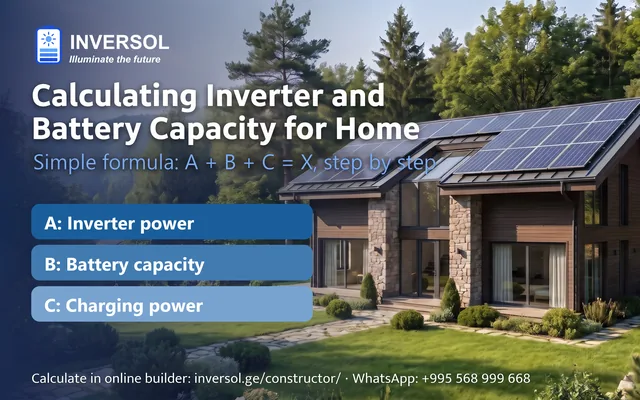
How to Size an Inverter and a Battery for Your Home
A + B + C: inverter kW, battery kWh, charging speed.
Install Inversol app
Quick access from your home screen
Open in Safari to install
To add Inversol to your home screen, open this page in Safari — tap ⋯ or the browser icon and choose "Open in Safari".
Typical household loads for 5, 12 and 20 kW hybrid inverters, plus start-up currents, three-phase limits and battery runtime.
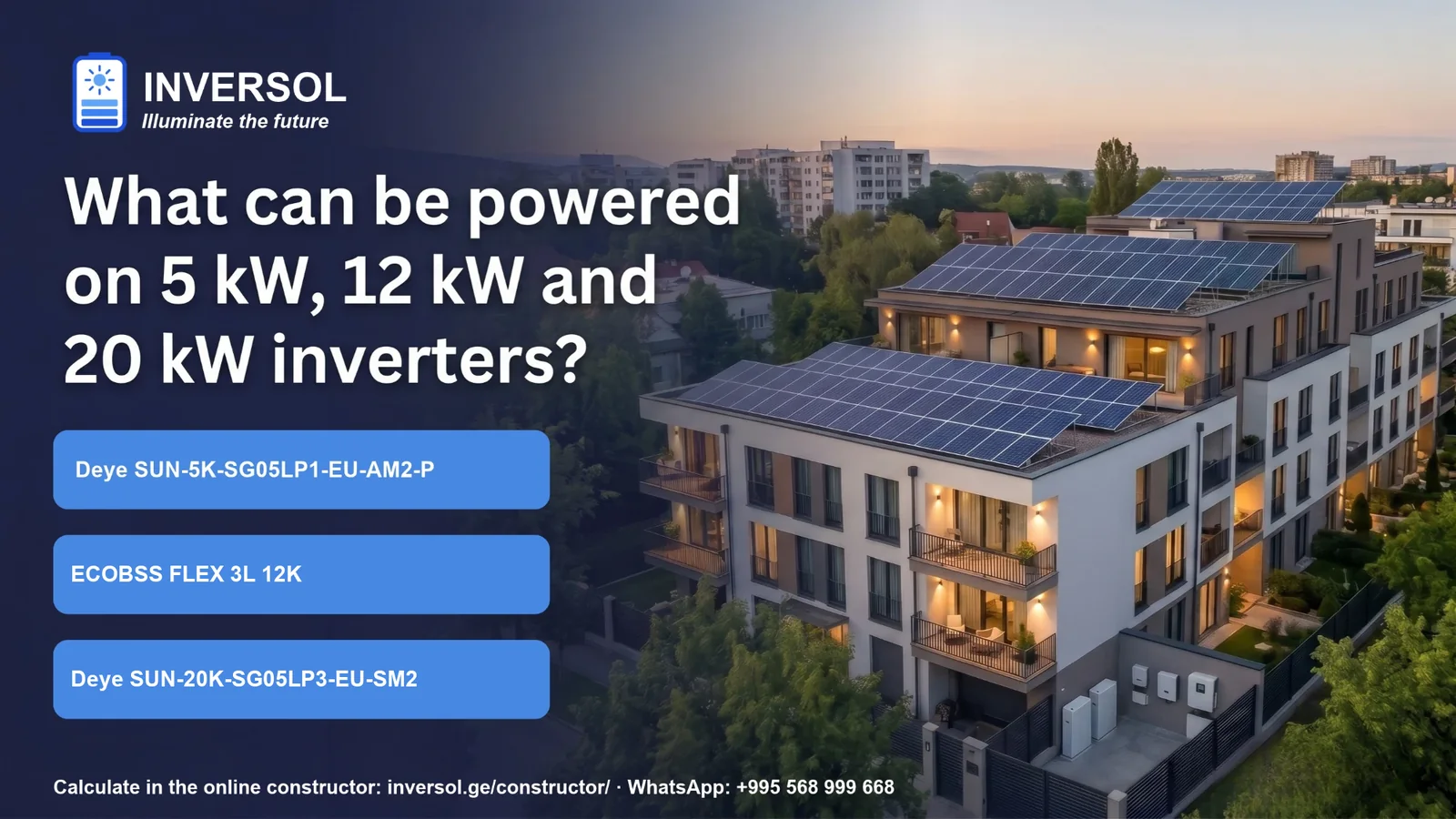
When people choose a system for their needs, the first question is always the same: how many kilowatts of inverter do I need, and what will it actually run when the power goes off?
Inverter power decides how many appliances you can run at the same time during an outage. It is calculated from your own consumption.
To know whether 5 kW, 12 kW or 20 kW is the best option for you, you need to know how much energy your appliances use and what you run most often: the TV, the air conditioner and so on. Exact figures are in each appliance’s nameplate or datasheet; below we use typical average values.
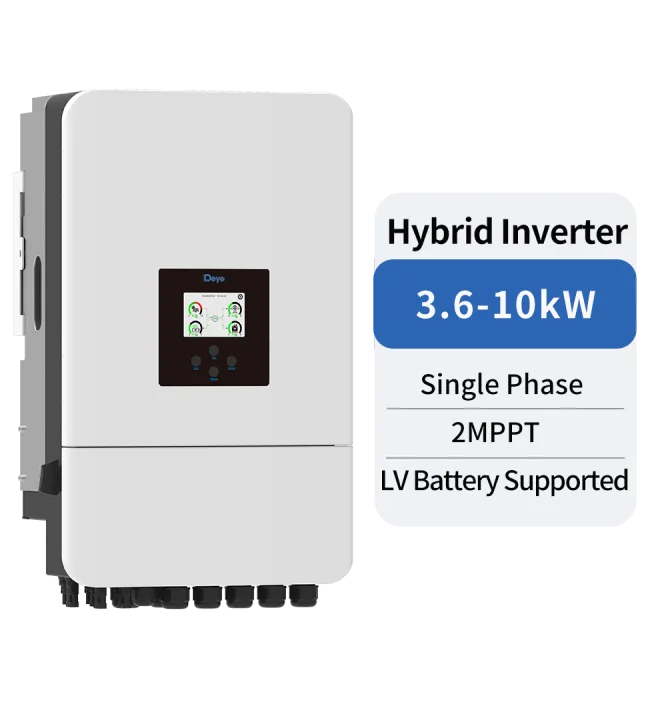
A 5 kW inverter powers lighting, a fridge, a Wi-Fi router, computers, a washing machine and a TV. It is an ideal choice for a basic set of appliances, and one of the most common choices in Georgia for apartments and small houses — for example Deye SUN-5K-SG05LP1-EU-AM2-P.
In practice you have a total limit of 5,000 W at any moment. It is quite enough for full comfort if you share the energy sensibly. An example of simultaneous load (typical values — check the exact ones on each appliance):
Total: ~3,400 W. The inverter still has 1.6 kW in reserve.
Please note: avoid switching on several powerful appliances at once (electric kettle, washing machine, iron, hair dryer, vacuum cleaner). If the washing machine is heating water and someone also turns on an iron and a kettle, the total exceeds 5 kW and the inverter shuts down to protect itself. Electric heating is also not recommended on a 5 kW system without a preliminary calculation, because heaters draw a lot of power continuously.
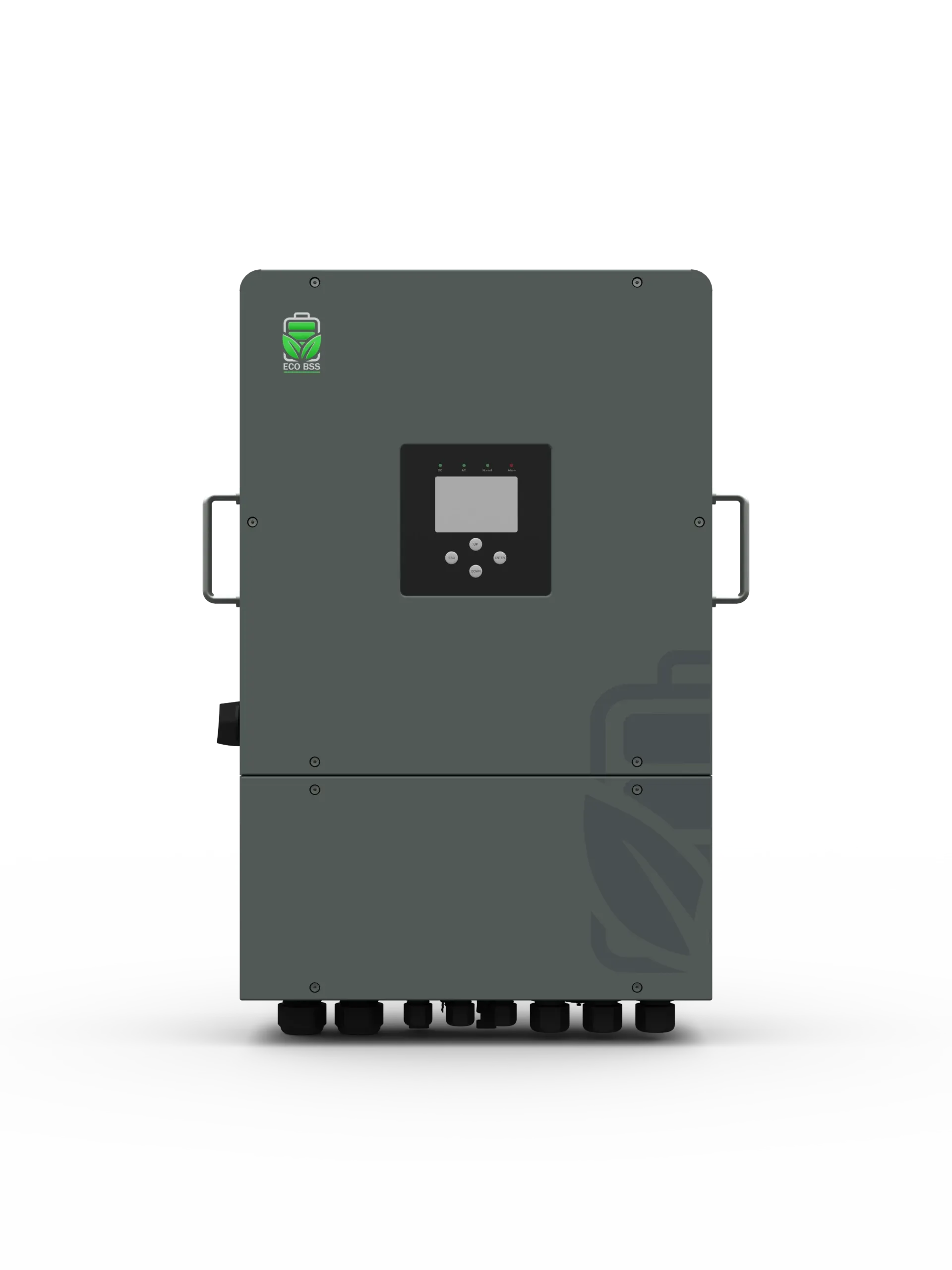
A 12 kW system lets you run several powerful appliances at once, be fully energy independent and connect three-phase equipment. 12 kW hybrid inverters are usually three-phase (for example ECOBSS FLEX 3L 12K or Deye SUN-12K-SG05LP3-EU-SM2) and are meant for large houses, villas or small commercial sites — a shop, a small hotel, a café.
What does 12 kW mean in practice? It is a large reserve: you can run almost everything you normally use at home at the same time. An example (typical values):
Total: ~9,100 W. The system carries this load comfortably and still has about 2.9 kW in reserve.
And 12 kW is not an infinite source either: if you switch on an electric boiler at full power together with the oven and the pumps, the limit can still be exceeded.
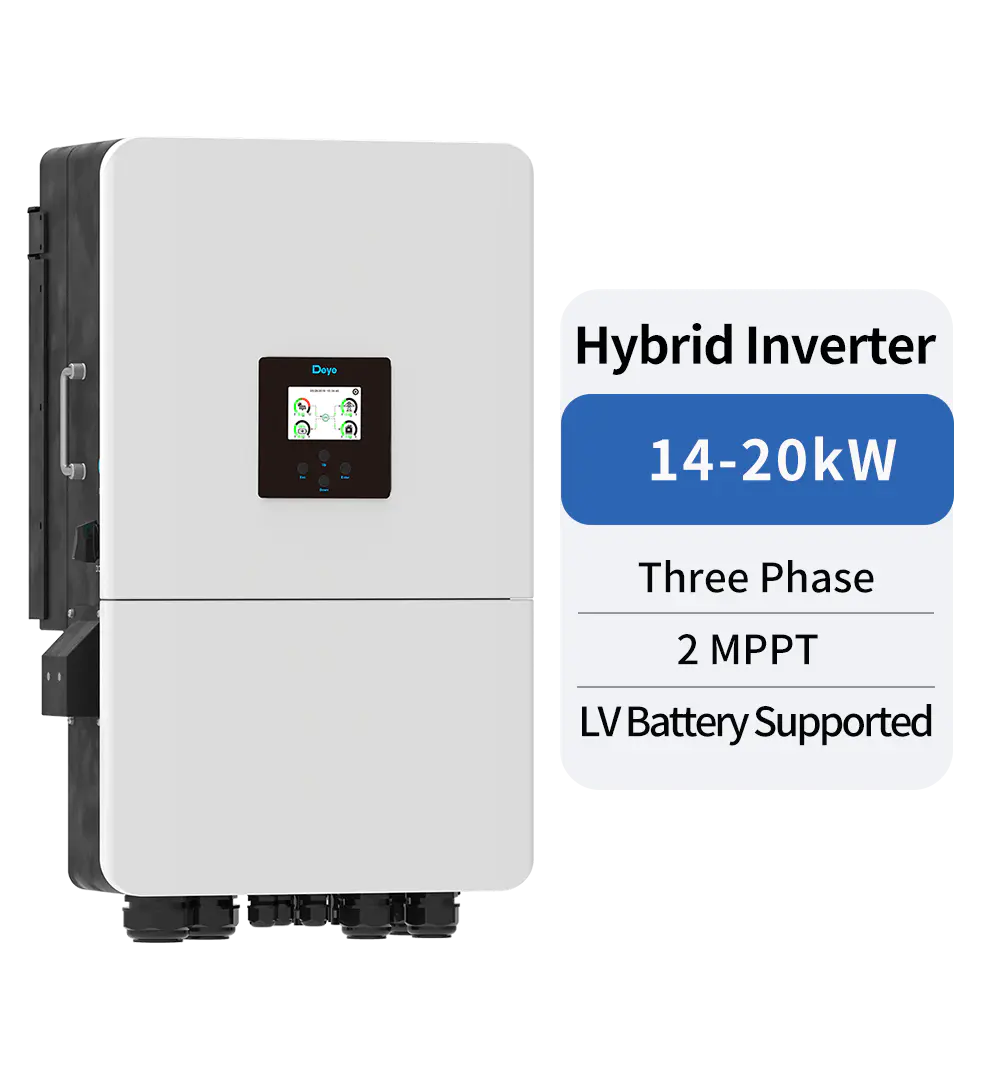
For a large house with a heated pool, a guest house, a restaurant or a small workshop, 12 kW may no longer be enough. In that case a three-phase 20 kW hybrid inverter is the optimal choice — for example Deye SUN-20K-SG05LP3-EU-SM2.
What 20 kW can handle in practice (typical values):
Total: ~17,000 W (17 kW). The system runs steadily and keeps about 3 kW in reserve.
Customers often ask whether they can run a central-heating boiler and a water pump:
In off-grid mode Deye SG05LP1 and SG05LP3 inverters can deliver up to 2× their rated power for 10 seconds, and the high-voltage SG01HP3 up to 1.5× for 10 seconds; always check the exact figures in the datasheet of your model. The 12 kW and 20 kW systems cope with start-up peaks of household pumps much more easily, but you should still not count on the 10-second reserve while other heavy appliances are running.
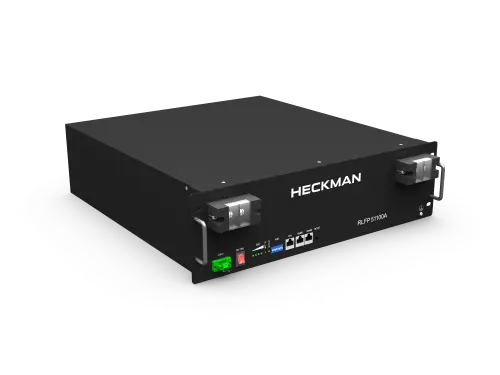
It is important not to confuse inverter power (kW) with battery capacity (kWh). The inverter decides how much equipment you can switch on at the same time; the battery decides how many hours that equipment will run without the grid and the sun. For example, with a constant 3.4 kW load on a 5 kW inverter, a standard 5 kWh battery will be empty in no more than about 1.5 hours. To learn how to calculate the energy reserve for an evening or a whole day, read How to Size an Inverter and a Battery for Your Home.
| Inverter | Grid phases | Constant load | Who it is for |
|---|---|---|---|
| 5 kW | 1 phase | up to 3–4 kW | Apartments and small houses with basic appliances and a gas boiler |
| 12 kW | 3 phases | up to 8–10 kW | Private houses and cottages with a borehole pump, several air conditioners and an active kitchen |
| 20 kW | 3 phases | up to 15–17 kW | Large villas with a heat pump or pool, guest houses, cafés and small businesses |
Not sure which power is right for you? Use our online constructor or write to us via the contact page — Inversol engineers will help you choose an inverter and battery for your home.
See also: solar panel calculator by electricity bill, EV charger in Tbilisi: Type 2, phases, wallbox, single-phase or three-phase hybrid inverter.
Open the online constructor, select your appliances and get an exact calculation, or write to us on WhatsApp: +995 568 999 668. The Inversol team will help you choose.
A + B + C: inverter kW, battery kWh, charging speed.
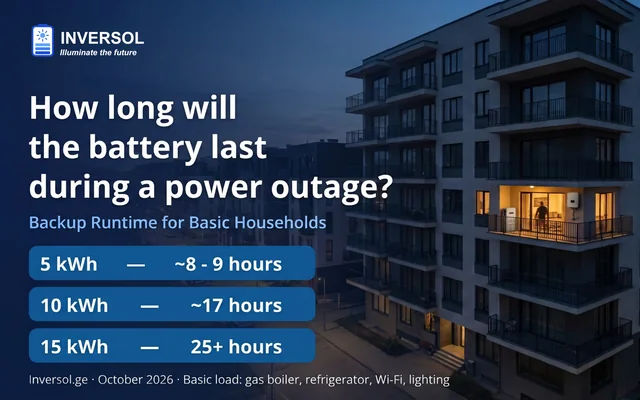
Formula and a ready table for 5, 10 and 15 kWh.
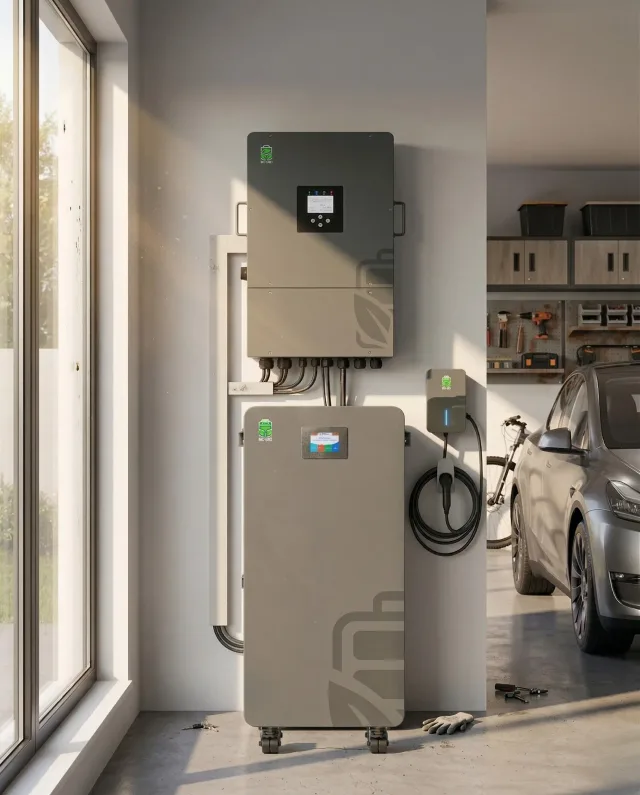
kW, 10 ms UPS, LiFePO4 and Deye models.
In-stock models from the Inversol warehouse — supply and install with Inversol and partners.