


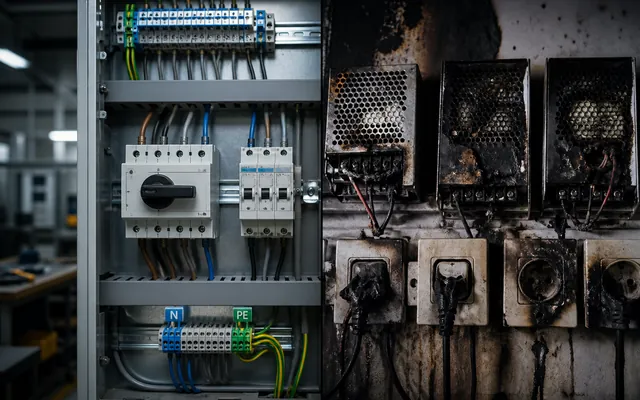
Floating neutral
380 V at outlets — install rules.
Install Inversol app
Quick access from your home screen
Open in Safari to install
To add Inversol to your home screen, open this page in Safari — tap ⋯ or the browser icon and choose "Open in Safari".
Engineering breakdown: DC-bus topology, relay vs semiconductor bypass, AGM vs LiFePO4, anti-islanding, and a 5-year TCO frame.
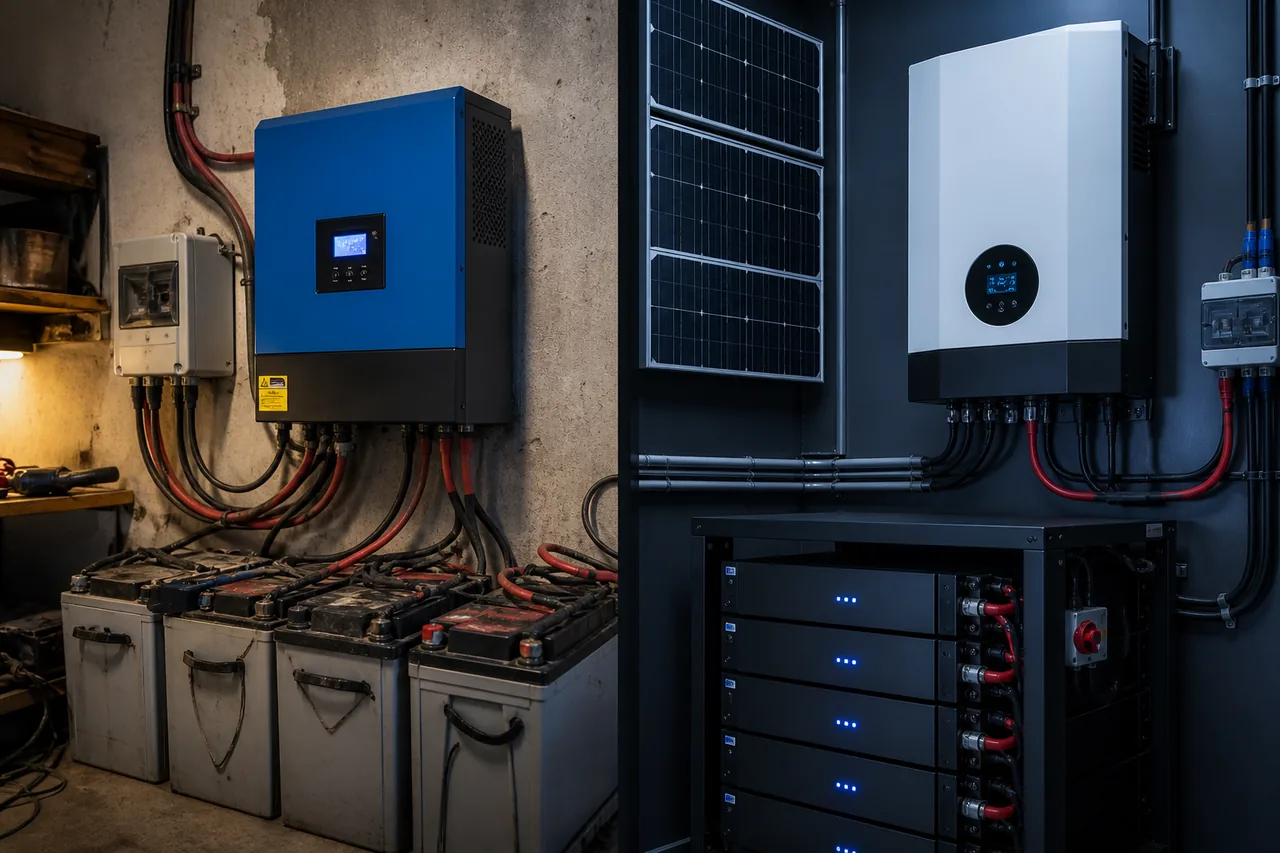
Installer chats repeat the same case: the buyer picks a low-cost standalone inverter (Must / PowMr / EASun / anonymous HF clone) plus AGM/GEL to “save money”. One season later — varistors blown by Telasi/Energo-Pro spikes, cyclic reboots of sensitive loads, and lead-acid at zero. Below: physics and Georgia’s regulatory frame, without marketing filler.
The brand sticker is noise. Architecture of conversion and the power stage is the signal.
Cheap Off-Grid (LV DC-DC + PWM):
[PV / energy bank 24–48 V] → [HF Push-Pull DC-DC] → [DC Bus ~400 V] → [H-Bridge DC-AC] → load
                                    ▲
                          current bottleneck, heat

Industrial hybrid (HV MPPT + bidirectional DC-AC):
[PV string 150–500 V] → [Buck-Boost MPPT] ──────────────┐
                                                         ▼
[Grid 220 V] ─────────→ [bidirectional inverter] → [DC Bus] → Smart Load / UPS
                                                         ▲
[LiFePO4 51.2 V] ─────→ [isolated CAN/RS485 DC-DC] ─────┘
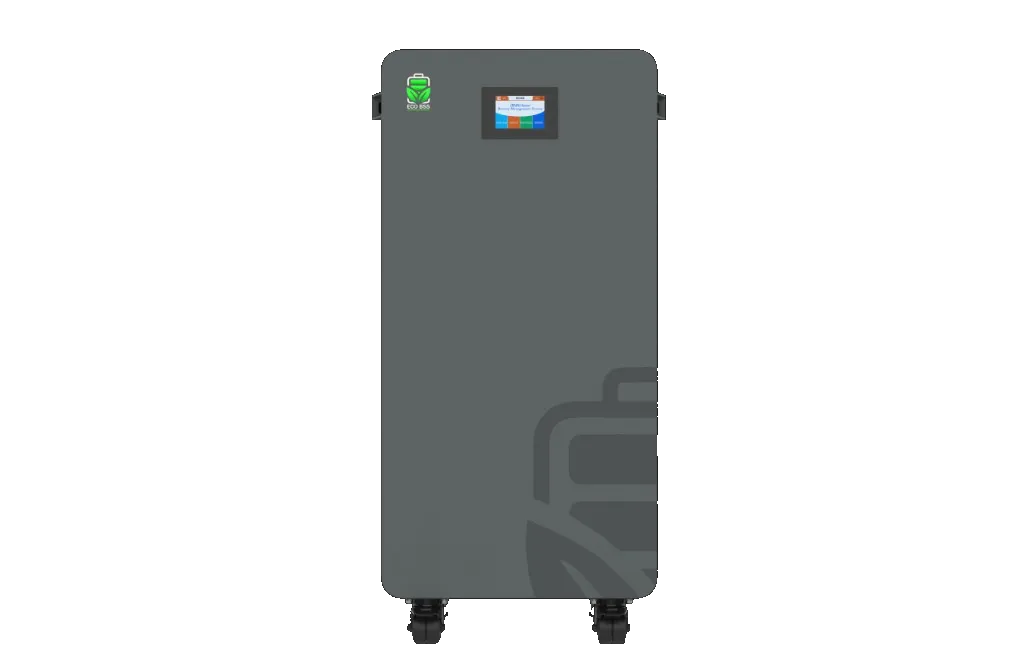
The usual “save on the inverter” move is lead-acid instead of industrial energy storage.
12 V 100 Ah AGM                         51.2 V 100 Ah LiFePO4
Nameplate: ~1.2 kWh                     Nameplate: 5.12 kWh
Useful @50% DoD: ~0.6 kWh               Useful @90% DoD: ~4.6 kWh
Cycles: 300–400 (~1.5 yr daily)         Cycles: 6000+ (15+ yr daily)
Home / small office: ~15 kWh/day, ~5 kW peak. Figures compare equipment classes only.
| Line item | Off-grid + AGM | Hybrid + LiFePO4 |
|---|---|---|
| Inverter ~5 kW | ~$400 | ~$1,300–1,500 |
| ~5 kWh useful capacity | ~$1,000 (AGM pack) | ~$1,600 (51.2 V rack) |
| Energy bank swap ~year 2 & ~year 4 | +$1,000 + $1,000 | $0 (normal cycle life) |
| Legal export / metering | $0 (no approval path) | Possible when certified; savings = self-consumption + Net-Billing/NM per site rules |
| 5-year hardware TCO (guide) | ~$3,400 + downtime/repairs | ~$2,900–3,100 CAPEX, no double AGM replace |
“Hybrid paid for itself in 5 years” is a slogan, not engineering: ROI depends on tariff, load shape, and metering scheme. The hard conclusion: the cheap class already loses on AGM replacements and zero legal export, plus power-stage failure risk.
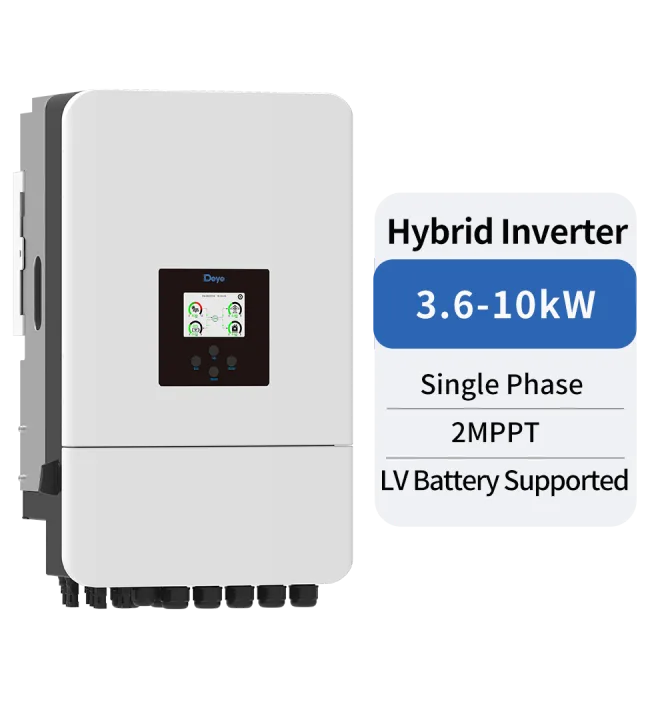
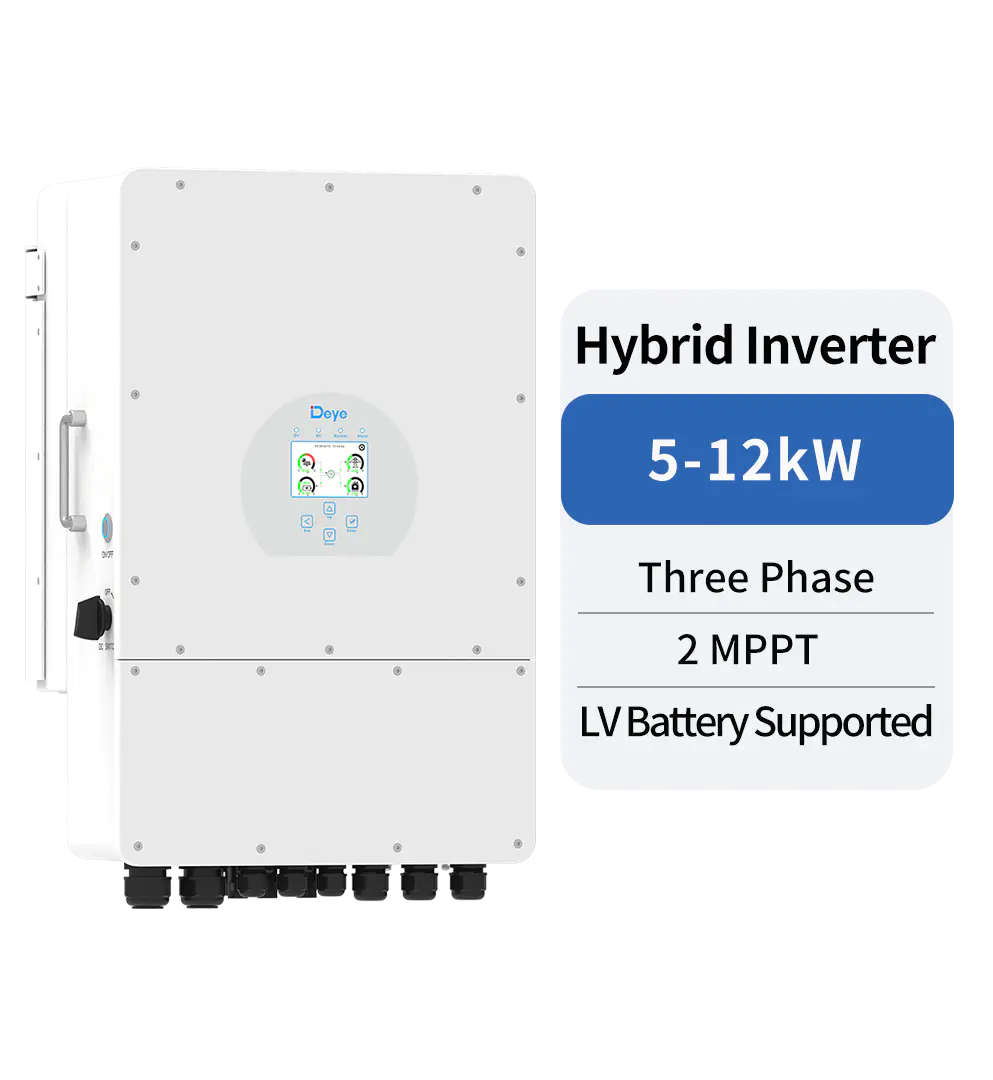
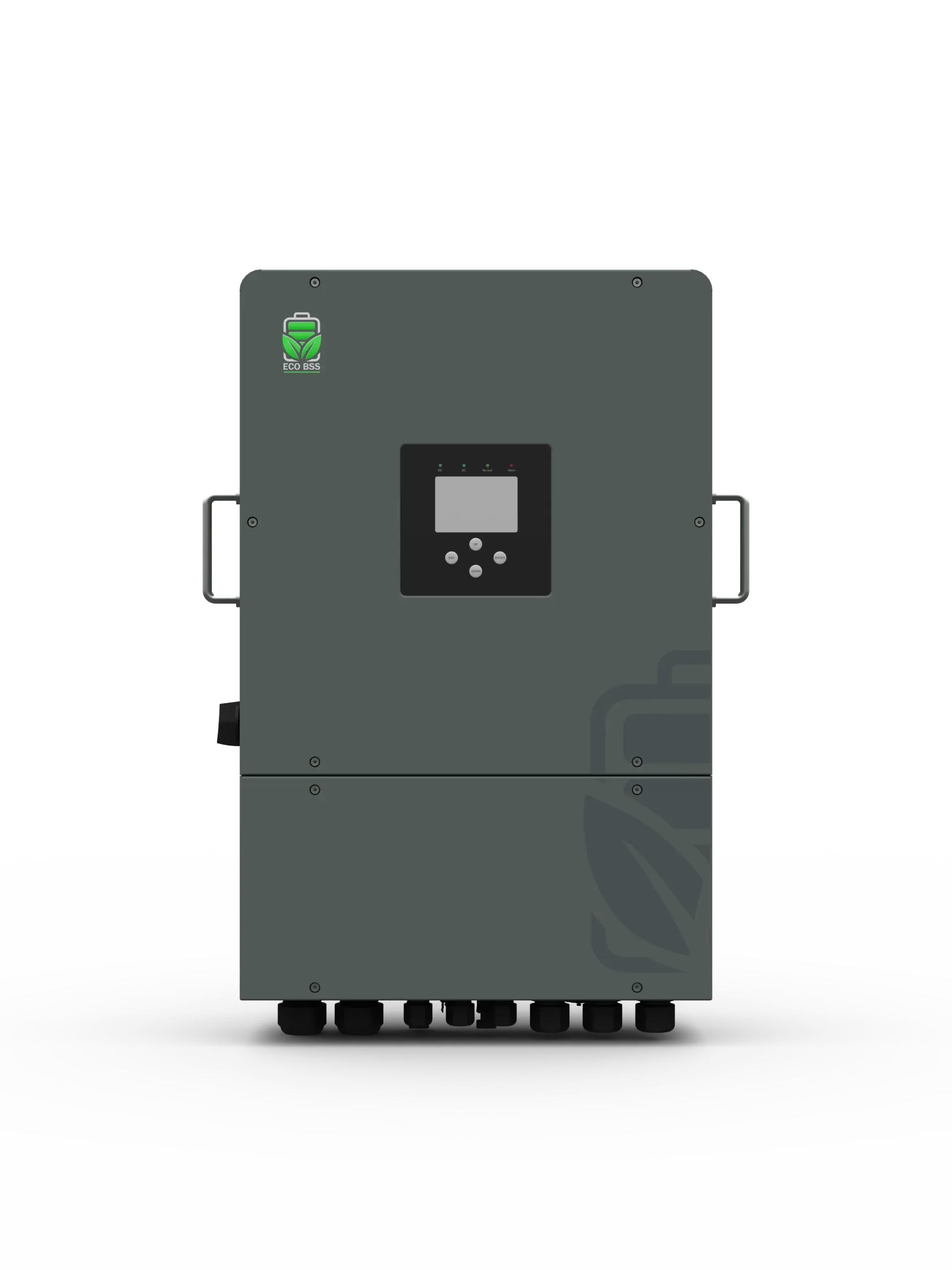
A cheap LV non-hybrid converter on a stationary Georgian site is not a bargain — it is deferred debt: binary-mode generation loss, lead-acid in ~18 months, and no legal metering path. Working architecture: HV hybrid with BMS protocols + industrial LiFePO4 energy storage. Hardware from Inversol stock; install by partners. System strategies: INVERSOL FLEX. Field faults: Deye error-code Academy.
Disclaimer: topologies and TCO figures are an August 2026 engineering guide. Confirm DSO rules, Net-Metering/Net-Billing quotas, and GNERC requirements on the live project.
We map load, transfer time, and metering — then propose hybrid + energy storage from Tbilisi stock.
380 V at outlets — install rules.
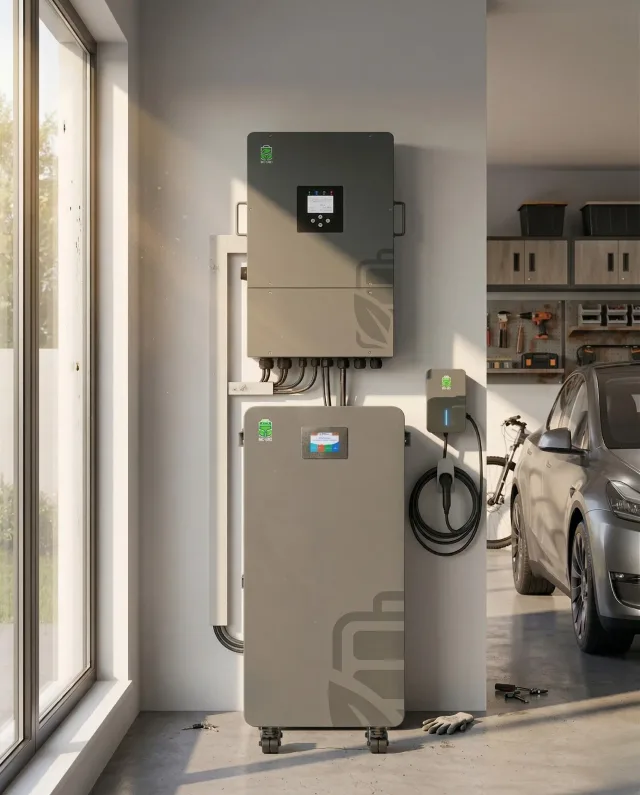
Specs before you buy.
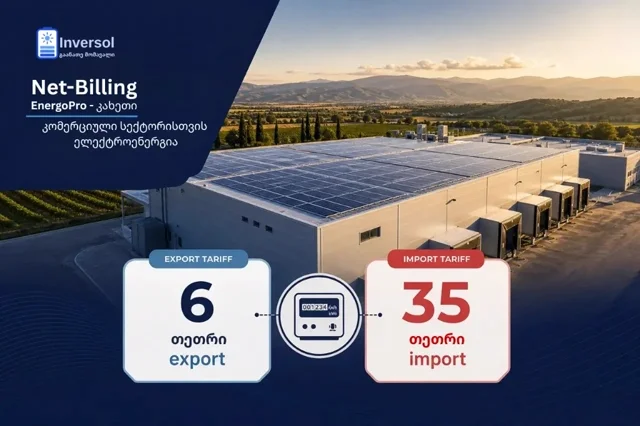
Why export without storage hurts.
In-stock models from the Inversol warehouse — supply and install with Inversol and partners.