


Terms
| Name | What it is | Not |
|---|---|---|
| INVERSOL FLEX | Hybrid ecosystem (inverter + energy storage + control) | A single SKU or “just an inverter” |
| FLEX Link 1.0 | Named architecture (PowerWallet / cloud, ports, strategies) | The whole ecosystem brand |
| FLEX 3L | LV inverter line (EcoBSS FLEX 3L) inside the ecosystem | Synonym for INVERSOL FLEX |
Inversol — warehouse in Tbilisi; installation — accredited partners. Prefer 51.2 V for LV energy-storage nominal language.
In short: what business gets
- Blackout protection — critical load on energy storage, takeover under 10 ms.
- Bill control — self-consumption strategies, Smart Load, readiness for hourly GENEX from 1 July 2027.
- CAPEX without a dead end — FLEX 3L licences scale power without tearing down the plant.
- Warehouse in Tbilisi — equipment supply; install — accredited network.
- Transparent engineering — port, neutral, and energy-storage standards — so the system lasts years, not “until the first winter”.
Which sites
Hotel / HoReCa
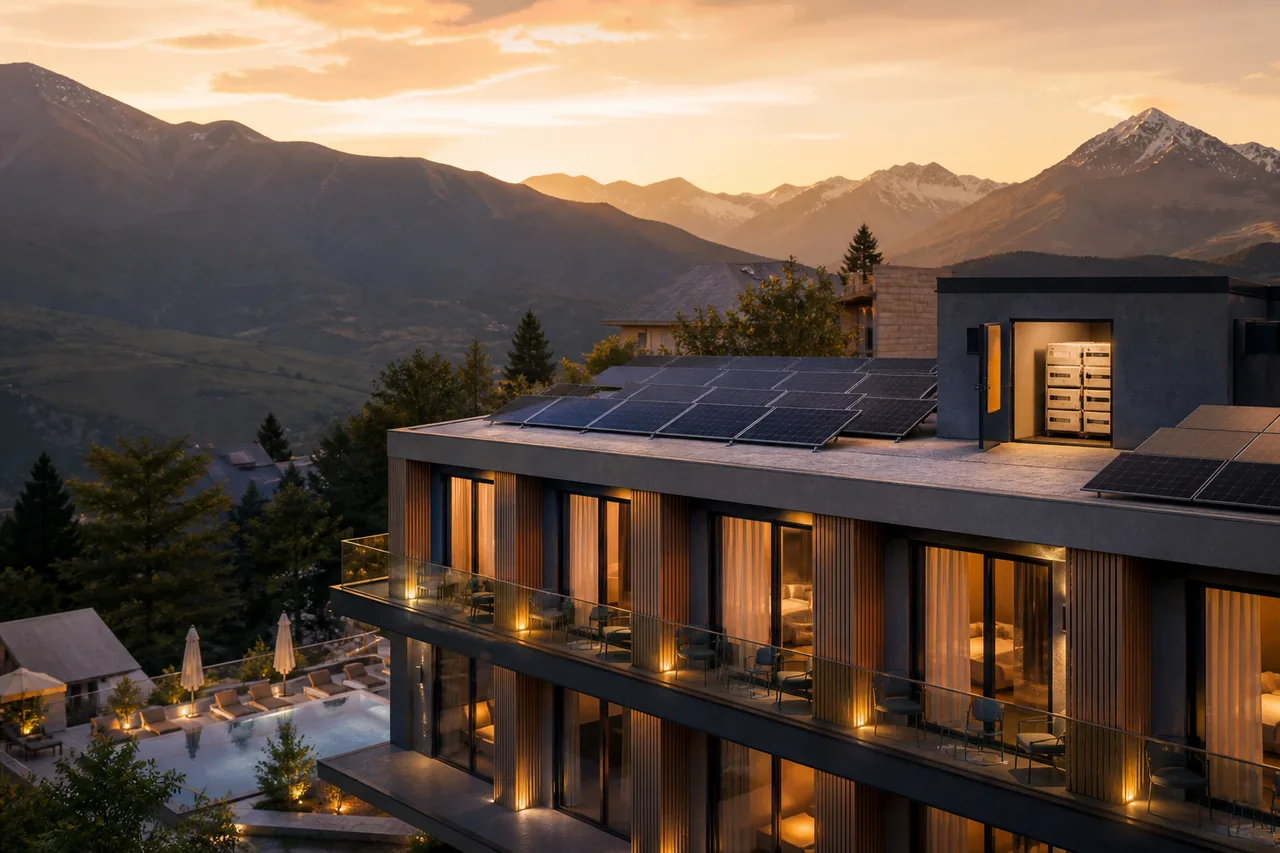
Guest reputation and cold lines. UPS + self-consumption; heavy kitchen — on Grid, not on storage. Hotel ESS buyer brief · UPS strategy.
Office / retail
Servers, POS, lighting. Cut Telasi peaks with storage; daytime — your own sun. Office & retail peak-UPS brief · ports.
Production
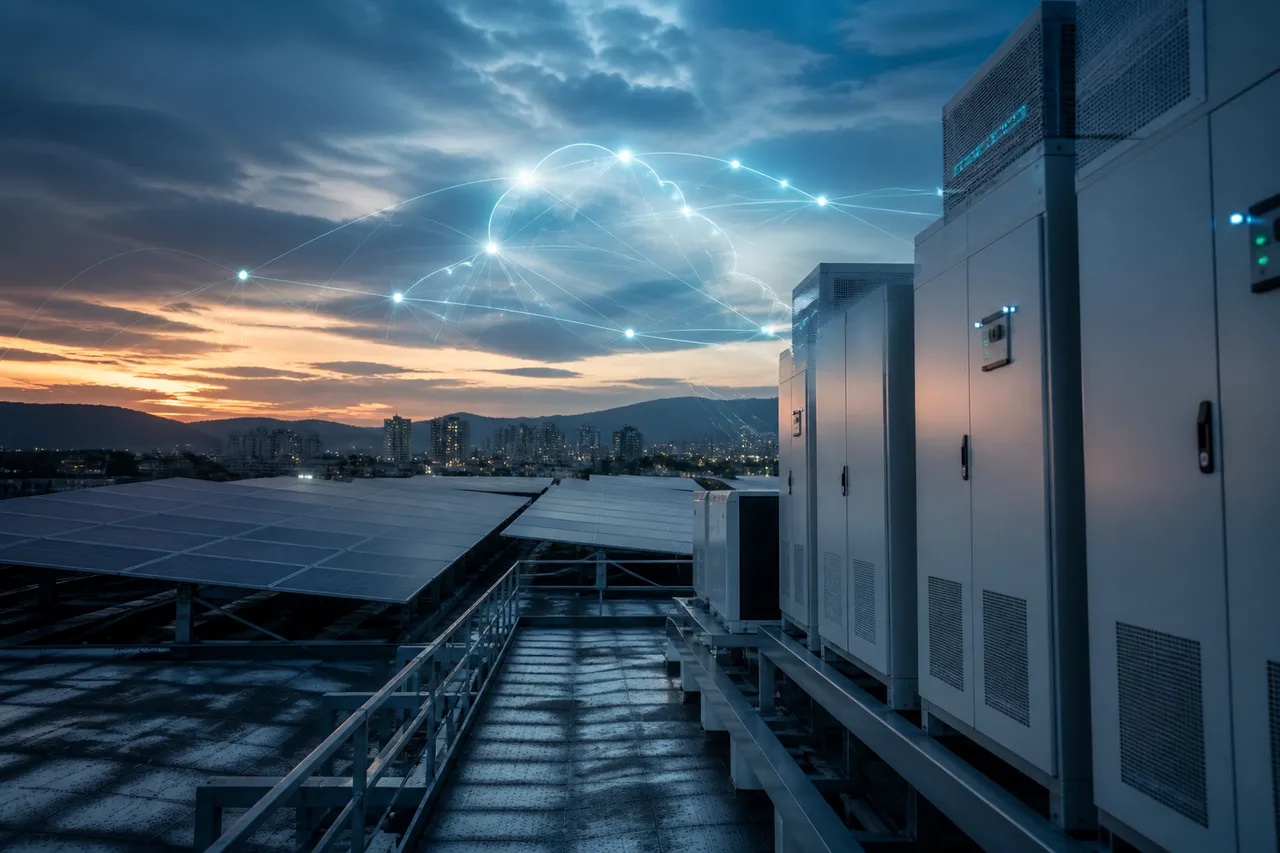
Scale with an LV cluster or HV. One node in service — the rest keep the floor running.
Proof on sites: projects · trusted by.
1. Why “cheap iron” hits the business

One business owner in Georgia calmly drinks coffee during a district blackout. Another is saving servers, POS terminals, and a stopped line. The difference is not luck — whether they bought a system or just boxes.
Fairy tales about an inverter that is “the same, twice as cheap” end in winter: grid sags, burned boards, dead energy storage within a year, tens of thousands of lari, and a hit to reputation.
FLEX Link 1.0 (Made in Poland) — architecture of the INVERSOL FLEX ecosystem: not “just a hybrid”, but a financial and energy manager for the site. Equipment — from Inversol’s Tbilisi warehouse; install — accredited partners.
Owner / CFO
Bills, downtime, CAPEX lifetime. Decision — via a site quote and clear strategies.
CTO / engineer
Below — port, neutral, storage, and cluster standards. Match them to your site regs.
2. PowerWallet and GENEX 2027 — energy as an asset

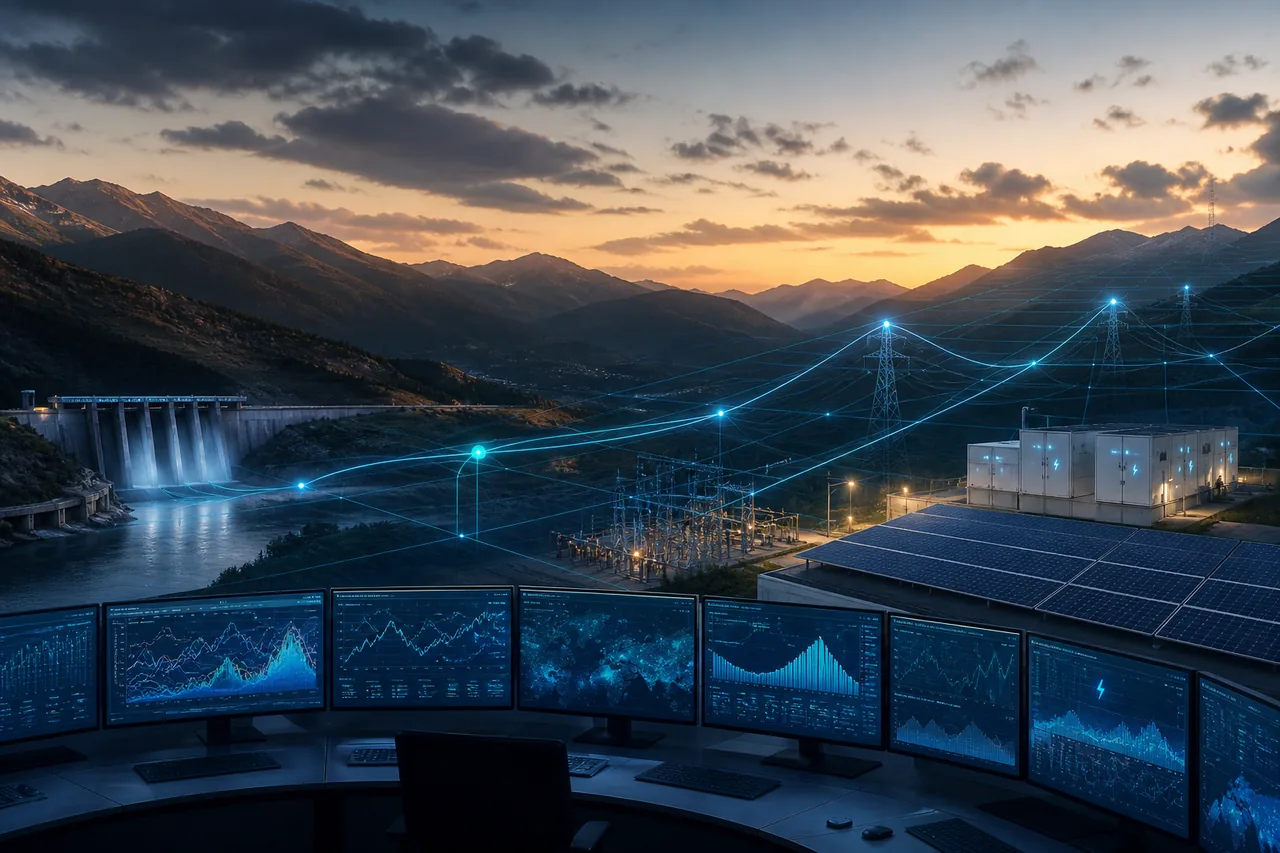
A classic plant is dumb: sun out — energy out. Through the PowerWallet cloud and OpenWeather, the system can plan for a rainy day, charge storage on cheap night energy, and hold the site by day while Telasi peaks hit the neighbours.
The GENEX energy exchange launch is set for 1 July 2027. Hourly metering will punish plants that dump kilowatts for pennies by day and buy back at peak prices. FLEX Link 1.0 is hardware-ready for arbitrage — not “a firmware someday”.
Owners see monetisation in PowerWallet; accredited partners handle setup. Buyer briefs: PowerWallet EMS cloud, GENEX 2027, Net-Billing, Peak Shaving B2B.
3. Hybrid and FLEX 3L licences — CAPEX without a dead end

On-grid in a blackout is useless glass. Off-grid is isolation. For business we take a hybrid. LV base (40–60 V window, nominal 51.2 V): ECOBSS FLEX 3L / 3L MAX — hotel, office, mid-size production.
Typical CAPEX mistake: buy 8 kW → need 12 a year later → tear-down and a new budget. FLEX 3L hardware is built for 12 kW; start with a soft limit (e.g. 6 kW). Upgrade via PowerWallet → Licences: digital key 8/10/12 kW without a hammer drill on site.
4. Ports Load / Grid / Gen — site logic, not “wires”

Business cares about one thing: what stays up in a blackout and what does not bankrupt the storage. FLEX Link architecture splits the flows:
- Port Load — the fortress: servers, POS, fridges. Takeover under 10 ms.
- Port Grid — the grid. Heavy non-critical load (15 kW oven) sits in parallel on Grid: solar mixes in; in a blackout it drops off and does not drain storage.
- Port Gen — generator with auto-start (~20% SOC, fuel savings up to ~40%), AC Coupling of an old on-grid, or Smart Load (boiler/EV). The GEN Switch module combines sources.
CT at the infeed is mandatory — otherwise the system is blind. Before panel work, isolate grid and storage (Load): a hybrid has two energy sources.
Install, PLC, and cluster detail — in the technical block below (for the CTO).
How the system earns: five strategies
You sell and buy not a “box”, but operating modes for the site. Profile is chosen per scenario; deep setup — by an accredited partner.
12. UPS strategy — bodyguard for revenue

Hotels, servers, restaurants, retail: storage holds high SOC, takeover under 10 ms — lights and IT do not blink. Direct protection of revenue and reputation. Inverters · Energy storage.
13. Self-consumption — cut expensive grid power

By day the sun charges storage; evening and night the site runs from storage — peak grid tariff is minimised. For B2B this is often the main OPEX lever.
14. Smart Load — surplus for the site

Noon, storage full, load low. A cheap plant dumps or sells for pennies. FLEX Link routes surplus to a boiler, EV, or other useful loop — energy stays a site asset.
15. Smart Trading — GENEX readiness

When tariffs are high — export/optimise; when pennies — store. Legal arbitrage toward 2027: a plant bought “only for today” becomes an expensive mistake tomorrow.
16. Cogeneration — electricity + heat

For sites with gas/heat: charge storage from the unit and useful heat into the floor. Two value streams instead of one “electric” box.
17. Five strategies — one app

The site profile picks the mode. Inversol and the partner help map the scenario (hotel / office / production) to warehouse hardware and a PowerWallet strategy.
Discuss your site scenario19. LV or HV — budget and scale decision

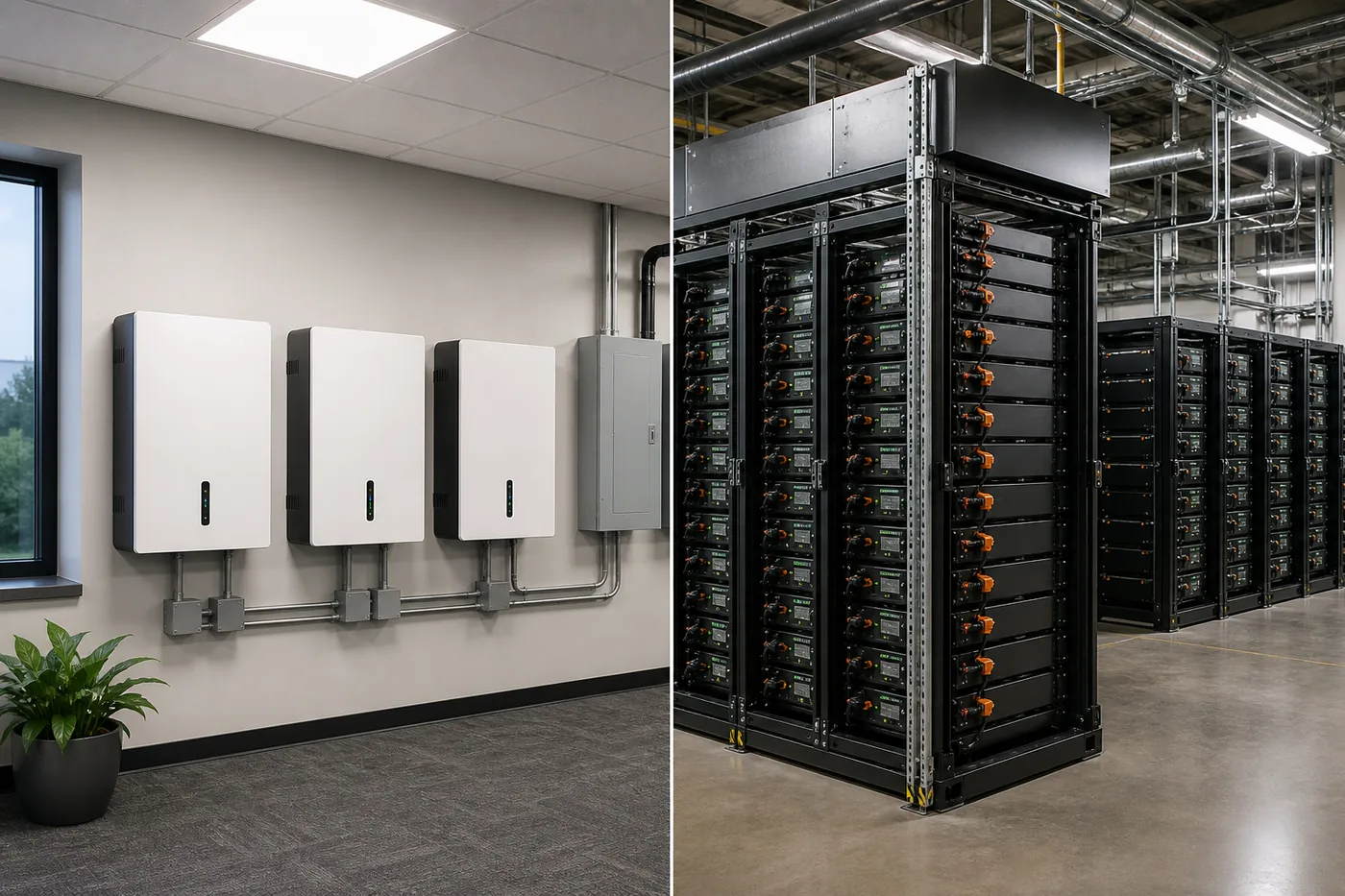
Around ~30 kWh, LV is often ~40% cheaper system-wide. 51.2 V LV is safer in service; HV — up to ~800 V DC, thinner cable, stricter balance and rack rules.
Business verdict: LV — restaurants, hotels, offices, small production. HV — industrial parks where LV cable is unrealistic by cross-section and length.
CFO deep-dive: LV vs HV for business in Georgia.
Technical depth
Below — standards Inversol and accredited partners use to build the system. For the CTO — a checklist. For owners without a tech team — proof that behind the “nice diagram” sits engineering, not box sales.
5. Inverter in the basement, panel at the gate — Eastron + PLC

Why business cares: long CT runs without trenching or blowing the build schedule. Stock CTs lie after ~30 m — fit an Eastron SDM 630 (or equivalent) in the main panel: RS485 / Wi-Fi / PLC over the 220 V phase.
6. 51.2 V, 50% asymmetry, cluster and UPS

- 51.2 V LV — safe service for commerce and housing.
- Phase asymmetry up to ~50% of rated per phase — a cheap three-phase unit often trips Overload on a real site.
- Cluster — up to 10 inverters without changing the control philosophy.
- UPS under 10 ms — machines and servers stay up.
7. Install regulations — why “saved on cable” burns the site

For the owner this is an acceptance checklist. On LV, currents are ~200 A — copper regs 50 mm², AC/DC breakers + SPD, solid earthing, strict polarity. Polarity error — not a warranty case.
- Full commutation first (panels, storage, grid) — then power.
- Cross-section and protection — by regulation, not “what fit the quote”.
- Chassis earth to the grid earthing loop.
8. Common neutral — protection from tens of thousands of lari in damage

Inversol standard: common neutral — N Grid and N Load bonded physically. “Split N” on bypass gives a floating neutral and up to ~380 V at outlets — a classic way to destroy equipment. 300 mA RCD at the infeed (fire), sensitive RCDs on the load side for people. Buyer explainer: floating neutral on hybrid inverters.
9. CT reverse — why “the system went mad” is fixed in 10 seconds

“Zero consumption” or “megawatts at night” is usually a flipped CT, not a “broken inverter”. Competent install flips polarity at the terminal — no theatre in front of the customer. For business this is a contractor selection criterion.
10. LV cluster — scale without changing the ecosystem

Up to 10×12 kW = 120 kW, 10×20 = 200 kW. Master / Slave, storage CAN only into Master, Parallel A/B, Modbus addresses. For business: grow power without “scrap the plant and start over”.
11. HV cluster — industrial scale

Same UI approach, different physics: own rack + BMS per inverter, shared HV storage bus is forbidden. Guide ~80 kW × 10 ≈ ~800 kW; cluster storage — on the order of MWh. One Slave in service — the rest keep the plant running.
18. LiFePO4 — three rules so storage lasts 10–15 years

Lead-acid and Grade-C “for margin” kill storage in year one. Premium LiFePO4 is safe chemistry for years if:
- 15–25°C, warm room;
- charge ~0.3C, not “whatever 200 A”;
- floor SOC ~20% — not to zero every cycle.
20. LV busbar, not daisy-chain — or warranty dies in a year

“Train” plus/minus daisy-chain: the top module takes ~80% of the current and dies. Standard: common copper busbar or diagonal. A metre of cable is cheaper than new storage and a warranty fight.
21. HV series only — balance SOC before assembly

Assemble 20% and 80% SOC into one rack and switch on — risk burning a BMS worth thousands of lari. Master BMS reports module count to the inverter; on LV parallels, addresses — via DIP.
22. DIP — the key to “BMS Communication Error”

Storage units need addresses. Blue DIP on ECOBSS LV — module passport. Five units → “5 Battery” column → toggles per table → restart → full capacity on screen. European engineering in a minute — if install knows the standard.
Business FAQ
Where do I start as an owner?
Who installs?
Why GENEX if the exchange is not tomorrow?
Why not the cheapest inverter?
LV or HV?
Next step — a quote for your site
Two paths in the market: buy a box and compete on pennies — or build a system that protects revenue and prepares the site for 2027. Inversol covers warehouse and engineering; install — accredited network.
Business — we design the plant as an asset. CTO — checks the standards above. Installer partner — training and certificate in the Academy.